![Multi Restaurant Aggregator [MRP]](https://eatanceapp.com/wp-content/uploads/2022/03/Hamburger.svg)



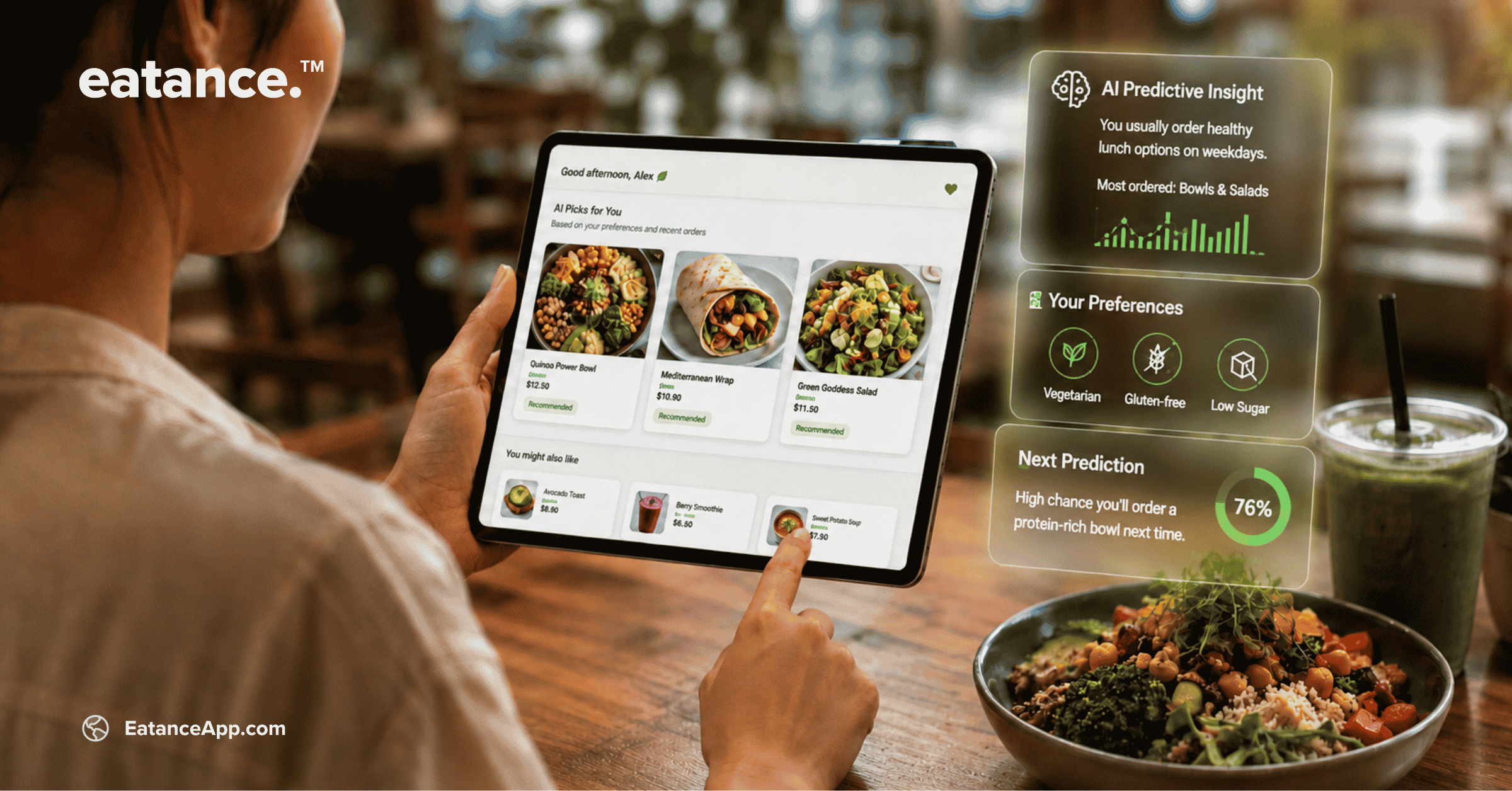
A customer opens a food delivery app, ready to order but unsure what they actually want.
Before they search for a dish, choose a cuisine, or scroll through dozens of restaurants, the app may already have a good idea of what could interest them.
Not because it is reading their mind.
Their past orders, food preferences, repeat choices, and ordering habits have been leaving clues all along.
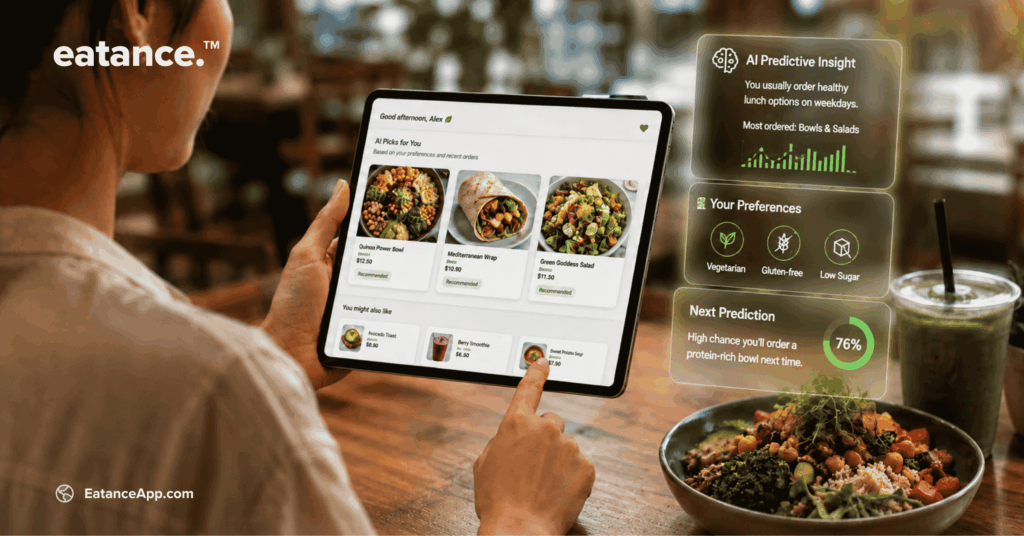
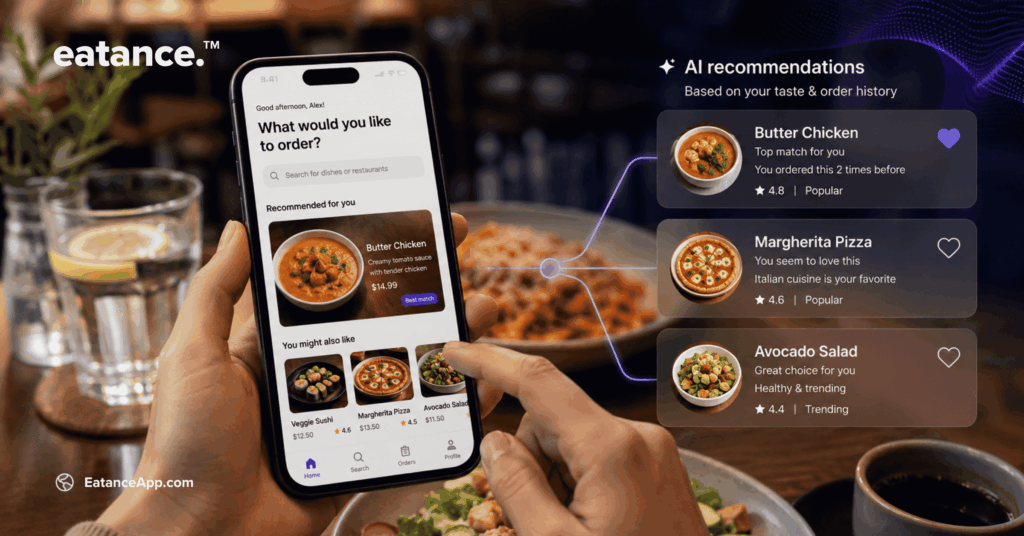
This is where predictive ordering comes in. By recognizing those patterns, AI can anticipate likely preferences and bring more relevant food choices forward, making the ordering journey faster, easier, and more personal.
In this blog, we will explore how predictive ordering works, what data powers it, where it can improve the customer experience, its limitations, and how platforms like Eatance MRP 3.0 are bringing this capability into modern food ordering.
What Is Predictive Ordering?
Predictive ordering is the use of artificial intelligence, behavioral data, and contextual information to estimate what a customer is most likely to order at a particular moment.
A predictive ordering system may analyze signals such as previous orders, favorite cuisines, preferred restaurants, usual ordering times, dietary preferences, spending patterns, and recent activity.
Based on those patterns, it can bring relevant dishes or restaurants closer to the customer instead of making them start every ordering journey from scratch.
For example, consider a customer who regularly orders a vegetarian burrito around lunchtime during the workweek.
A normal ordering platform may show the same restaurant list that every other customer sees.
A predictive system may recognize the customer's routine and surface:
- Their previously ordered burrito
- Similar vegetarian lunch options
- Another restaurant serving comparable dishes
- Relevant sides or drinks
- Meals within their usual price range
Predictive ordering therefore goes beyond simply asking:
"What might this customer like?"
It also asks:
"What is this customer likely to want right now?"
“Being able to anticipate what customers want, when they want it, will hopefully lead to better customer engagement with the brand.”
- Ashley Fenn, VP of Business Insights and Marketing at Flynn Group
Predictive Ordering vs Traditional Recommendations
Traditional recommendations and predictive ordering are closely related, but they do not work in exactly the same way.
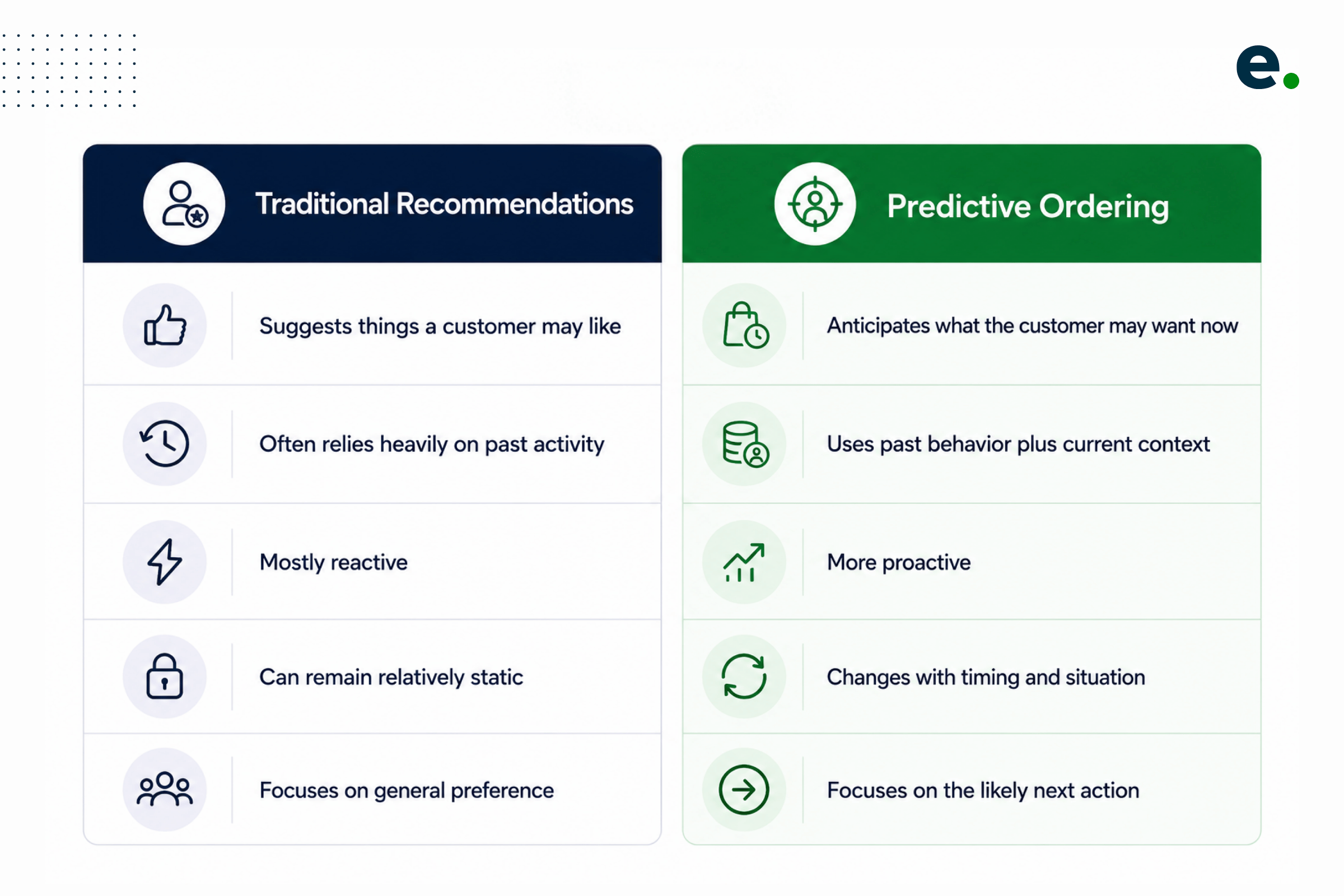
Predictive Ordering vs Traditional Food Recommendations
For example, a traditional recommendation may say:
“You ordered pizza before, so you may like these pizzas.”
Predictive ordering goes a step further. It considers whether pizza is likely to be relevant for that customer at this particular moment, based on factors such as their recent behavior, usual ordering patterns, and current context.
So, while traditional recommendations focus on what a customer tends to like, predictive ordering focuses more on what they may be most likely to want next.
From Searching for Food to Anticipating Intent
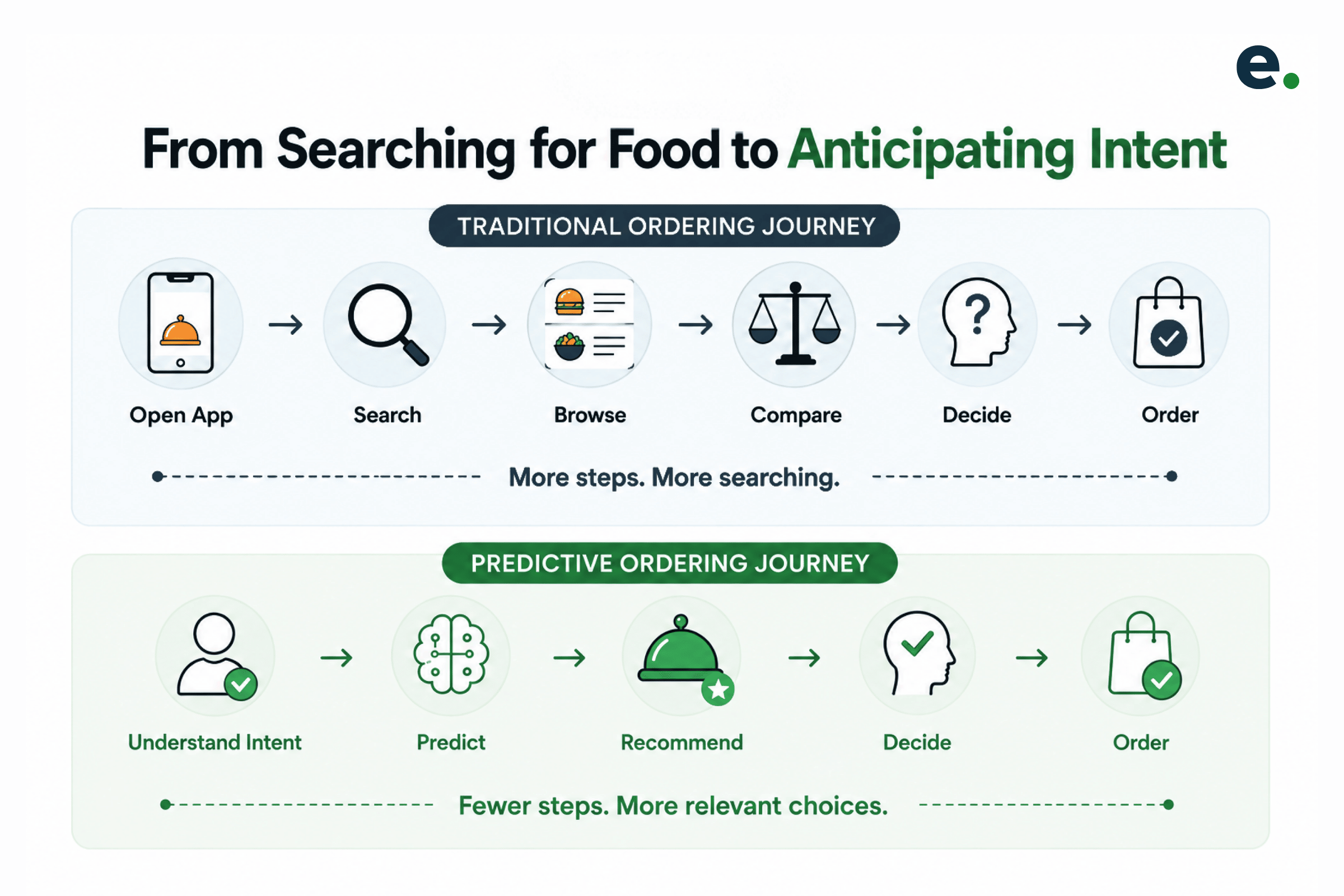
How Predictive Ordering Improves the Food Ordering Journey
Traditional food ordering puts most of the work on the customer. On the other hand, predictive ordering changes that journey by helping the platform understand likely intent earlier.
The difference is not that customers stop exploring. They simply spend less time filtering through irrelevant options. By learning from past behavior, preferences, timing, and current context, a predictive ordering system can bring more relevant choices forward sooner.
For customers, that can mean faster decisions and less scrolling. For restaurants and food delivery platforms, it can create a more personalized experience that improves as the system learns over time. The shift is simple: from making customers search for the right choice to helping them reach it faster.
Quick Stat:
According to an IBM Institute for Business Value and National Retail Federation study published in 2026, 45% of surveyed consumers already use AI for help during their buying journeys.
Why Food Ordering Is Well Suited to Predictive AI
Food choices may seem spontaneous, but they often follow patterns around what people eat, when they order, where they order from, and how much they typically spend.
A customer might prefer quick lunches during the week, comfort food on weekends, or consistently choose vegetarian, high-protein, or spicy meals. These behaviors give AI restaurant ordering systems useful signals such as order history, cuisine preferences, dietary choices, favorite restaurants, ordering frequency, location, and time of day.
But past behavior alone is not enough. Food preferences are highly contextual. Someone's usual lunch choice may not be relevant for dinner, and a weekend craving may be very different from a weekday routine.
These expectations show why personalization is moving beyond simple recommendations. Customers increasingly expect brands to understand their needs and even anticipate them, which is exactly where predictive ordering becomes relevant.
That is why effective predictive ordering needs to understand both what a customer generally prefers and what is likely to be relevant at that particular moment.
Quick Stat:
In Salesforce research, 56% of customers said they expect offers to always be personalized, while 73% said they expect companies to understand their unique needs and expectations.
How Does AI Predict What a Customer Might Order Next?
A predictive ordering system does not rely on one piece of information. It combines customer behavior, timing, preferences, and current context to identify patterns and rank the options most likely to be relevant.
1. Past Orders
Order history gives AI a strong starting point. It can look at repeat dishes, favorite restaurants, preferred cuisines, usual spend, add-ons, and meal combinations to understand recurring habits.
What AI learns:
Which foods, cuisines, restaurants, and order patterns appear most consistently.
Example:
If a customer regularly orders Thai food and often chooses spicy dishes, AI may identify both Thai cuisine and spicy food as recurring preferences.
2. Ordering Time
Food choices often change depending on when a customer is ordering. AI can compare weekday and weekend behavior, lunch and dinner habits, late-night orders, and recurring ordering schedules.
What AI learns:
When certain food preferences are more likely to appear.
Example:
A customer may usually choose a healthy bowl for weekday lunch but prefer burgers on Saturday evening. Timing helps AI distinguish between those two habits.
3. Taste and Dietary Preferences
Repeated food choices can reveal broader preferences beyond a specific dish. These may include cuisine type, ingredients, vegetarian or vegan choices, high-protein meals, gluten-free options, spice level, and preferred meal types.
What AI learns:
The wider food characteristics a customer tends to prefer.
Example:
Someone who often orders vegetarian Indian food may also be shown a vegetarian Thai curry or Mediterranean bowl. This is how AI food recommendations can support discovery without becoming random.
4. Current Context
Past behavior alone may not be enough. AI can also consider what is happening at the moment, such as location, recent searches, current basket, restaurant availability, menu availability, delivery time, and other real-time conditions.
What AI learns:
Whether a known preference is actually relevant in the current situation.
Example:
A customer may frequently order from a particular restaurant, but if its delivery time is unusually long, the system may prioritize a similar option that can arrive sooner.
5. Relevance Ranking
Once these signals are combined, AI evaluates multiple dishes and restaurants and ranks them according to how well they match the customer’s likely intent.
What AI learns:
Which available options have the strongest chance of being relevant at that moment.
Example:
One dish may rank highly because it is a repeat favorite, another because it matches the customer’s usual cuisine and budget, and a third because it offers a new but similar option.
Behind this process, technologies such as machine learning, recommendation engines, behavioral models, similarity models, and contextual ranking may be used.
The customer does not need to see that complexity. What matters is that relevant choices appear sooner while the final decision still stays with the customer.
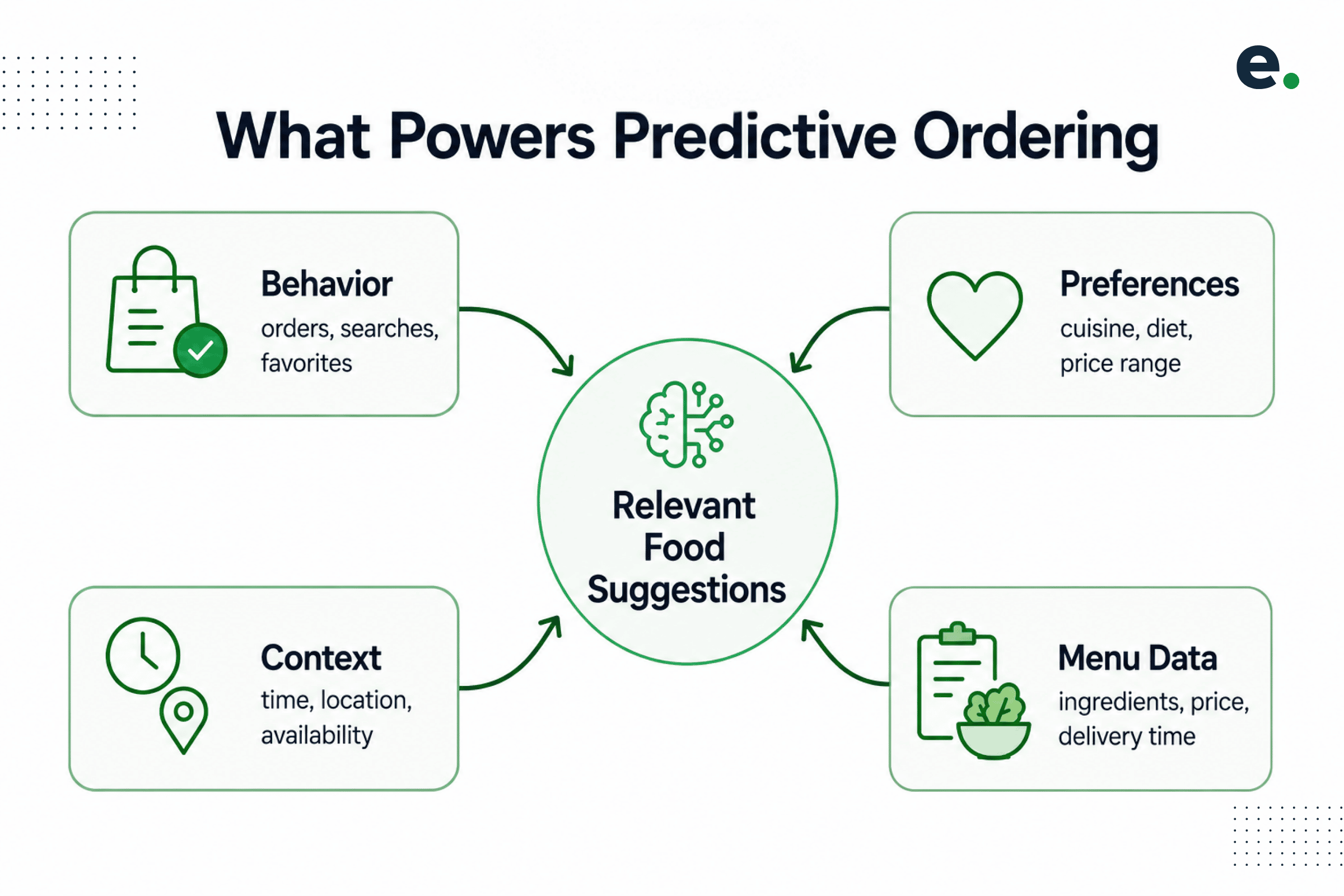
Predictive Ordering Data: Behavior, Preferences and Context
What Data Can Power Predictive Ordering?
Predictive ordering depends on data, but the goal is not to collect as much information as possible. The most useful data is relevant, reliable, and directly connected to the ordering journey.
A predictive ordering system can typically draw from four main types of information:
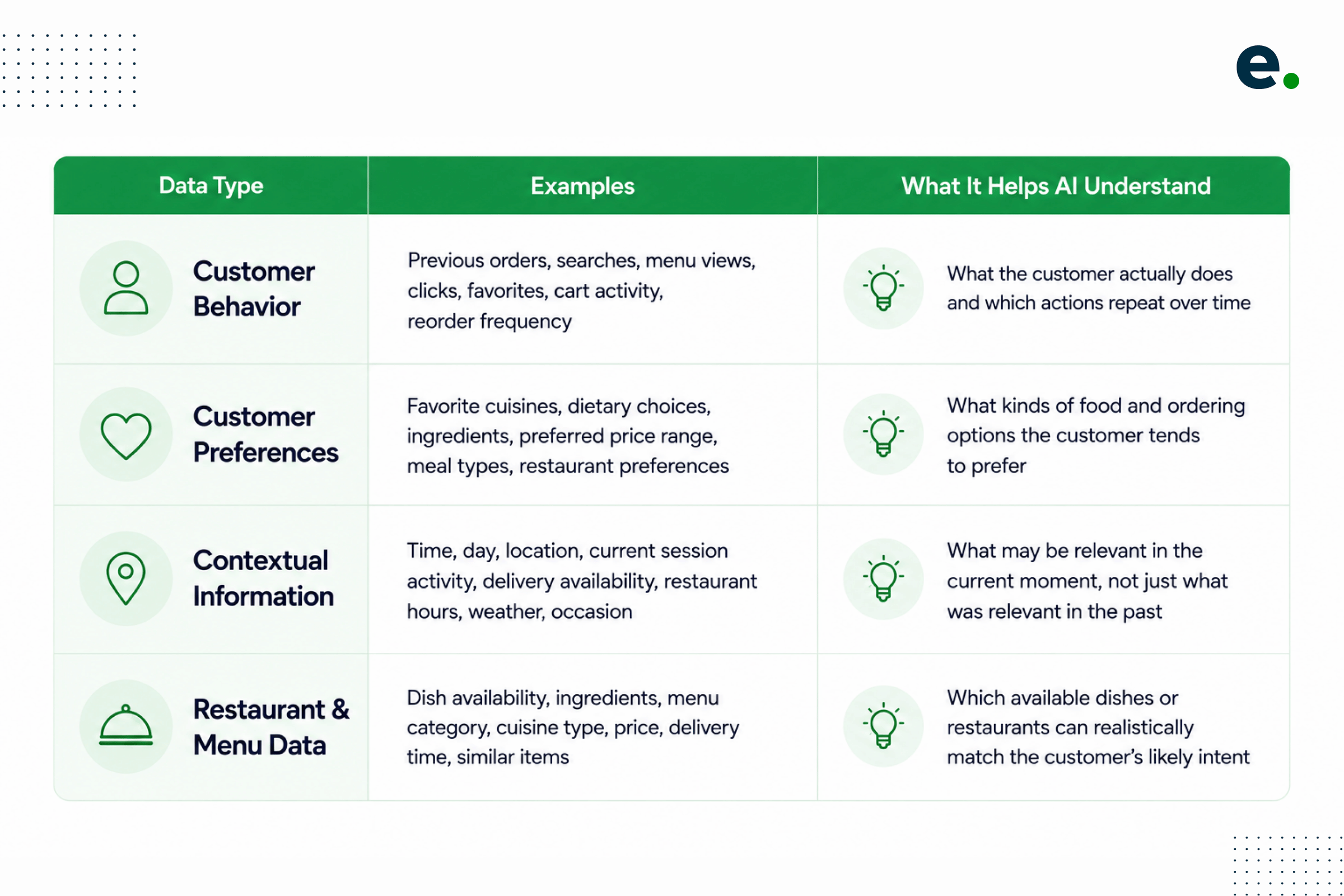
Customer and Restaurant Data Behind AI Food Recommendations
These different data points become more useful when combined. Order history may show what a customer usually likes, while context helps determine whether that preference makes sense right now. This is where predictive analytics in restaurants can add value by turning customer, menu, and ordering data into patterns that support more relevant predictions.
What Predictive Ordering Looks Like in a Real Customer Journey
Predictive ordering becomes easier to understand when you see how it can respond to different customer behaviors.
Scenario 1: The Routine Lunch Customer
A customer regularly orders lunch on weekdays and usually chooses bowls, wraps, or salads. Over time, the system recognizes that pattern and can bring similar lunch options, familiar restaurants, and choices within the customer's usual price range closer to the top.
The result is a faster path to a relevant meal without having to browse the entire app.
Scenario 2: The Friday Night Reorder
Some habits are highly time-specific. A customer may frequently order pizza on Friday evenings, often with the same drink or side.
When that pattern repeats, predictive ordering can surface those familiar choices at the right moment, making repeat ordering quicker and more convenient.
Scenario 3: The Health-Conscious Customer
A customer who consistently chooses vegetables, lean protein, or lighter meals creates a clear preference pattern.
Instead of relying only on overall popularity, the platform can prioritize dishes that better match those choices. This makes restaurant customer personalization feel more relevant to the individual.
Scenario 4: The Customer Who Wants Something New
Prediction should not mean showing the same dishes repeatedly.
If someone frequently orders Korean food, the system can still use that preference while introducing similar cuisines, new dishes, or restaurants with comparable flavors.
This helps predictive ordering balance two things customers often want at the same time: familiarity and discovery.
How Predictive Ordering Can Improve the Customer Experience
The real value of predictive ordering is not that AI knows more about the customer. It is that the ordering journey becomes easier, faster, and more relevant.
Less Searching, Faster Decisions
A multi restaurant app can contain a huge number of dishes. Predictive ordering narrows that choice by bringing the most relevant options forward, reducing unnecessary browsing and decision fatigue.
More Relevant Discovery
AI can introduce customers to new dishes and restaurants that still match their known preferences, helping them discover more without making the experience feel random.
Easier Repeat Ordering
For customers who regularly order the same meals, predictive ordering can surface familiar choices at the right time and shorten the path to checkout.
Better Dietary Relevance
Customers with consistent dietary preferences can see more suitable dishes earlier instead of repeatedly filtering through the full menu.
More Personalized Experiences
Two customers using the same platform can receive different recommendations based on their tastes, routines, and past behavior. This creates stronger restaurant customer personalization and a more useful ordering experience.
What Predictive Ordering Can Mean for Restaurants and Food Delivery Platforms
Predictive ordering does more than improve the customer experience. It can also help restaurants and food delivery platforms create smoother journeys, surface more of the menu, and engage returning customers more effectively.
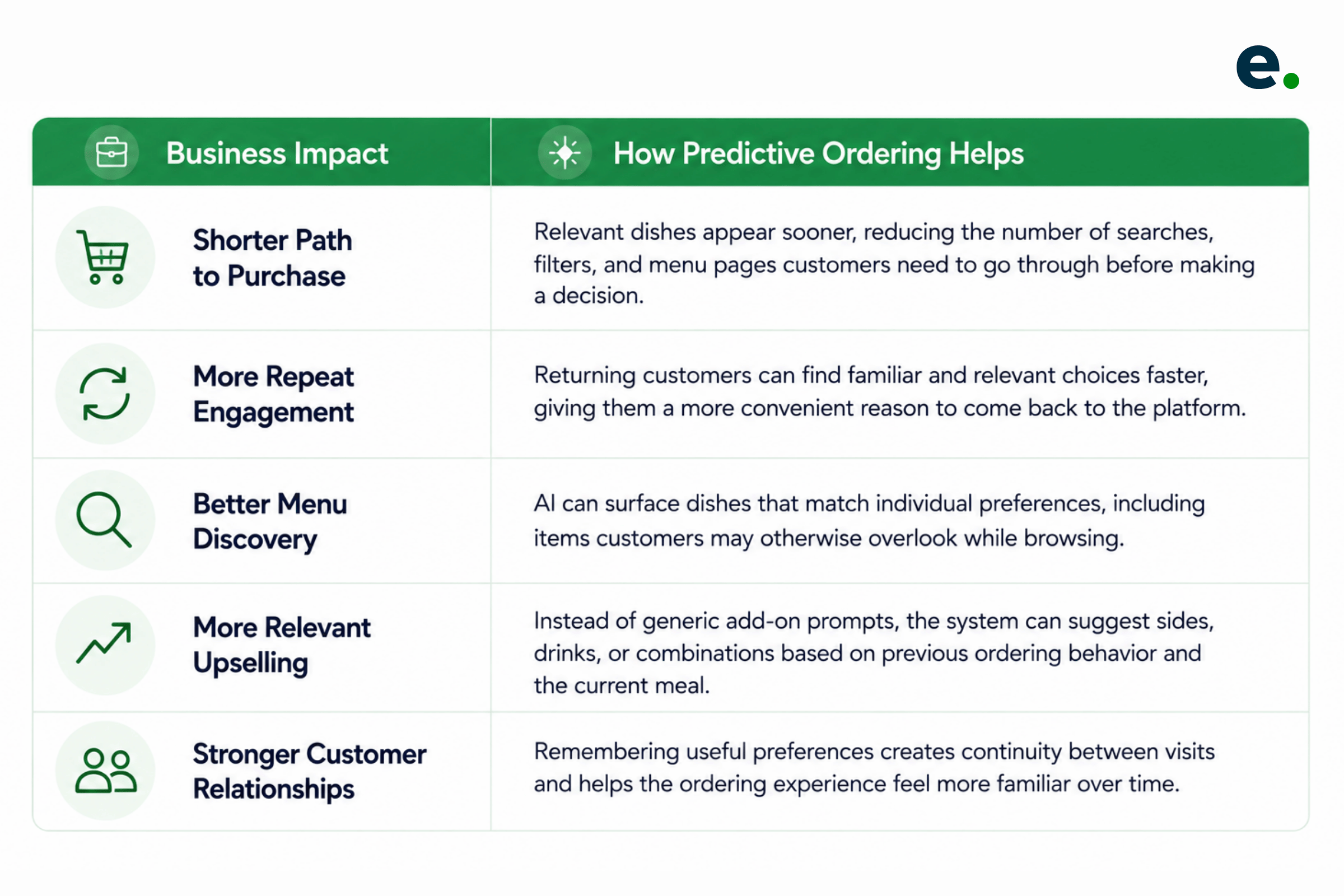
How Predictive Ordering Improves Restaurant Business Performance
The common thread is relevance. Predictive ordering helps platforms show customers more of what is likely to matter to them, rather than simply presenting the same options and promotions to everyone.
Quick Stat:
Salesforce research found that 65% of consumers say they are more likely to remain loyal to companies that provide a more personalized experience.
When Predictive Ordering Gets It Wrong and Why Customer Control Matters
Predictive ordering can identify useful patterns, but customer behavior is not always predictable. Good systems need to account for that.
Repetition
Showing the same type of food too often can make recommendations feel narrow. Predictive systems should balance familiar choices with new options.
Misread Preference
Not every order reflects a personal preference. Customers may be ordering for family, friends, colleagues, or an event, so one unusual order should not reshape the entire profile.
Changing Habits
Preferences can change over time because of diet, budget, location, or taste. Predictive models need to adapt as new behavior appears.
Missing Context
A recommendation can match past behavior and still be wrong for the current moment. Timing and situation matter just as much as history.
Most importantly, prediction should remain a suggestion. Customers should always be free to search, browse, ignore recommendations, and choose something completely different.
Quick Stat:
According to PwC’s 2025 Customer Experience Survey, 53% of consumers say sharing personal information is worth it when it makes their interaction with a brand smoother. At the same time, 93% say mishandling that data would cause them to lose trust in the brand.
How Eatance Brings Predictive Ordering Into Food Discovery and Ordering
In Eatance MRP 3.0, predictive ordering is not an isolated feature. It works as part of a broader AI-assisted ordering journey designed to help customers discover food, narrow their choices, and order with less effort.
A customer might:
- Discover a dish with Food Scan by uploading or taking a photo
- Get personalized suggestions with Smart Order & Diet based on cravings or dietary preferences
- Check nutritional insights before making a choice
- Compare similar dishes across restaurants
- Place an order using voice
- And over time, receive predictive suggestions based on recurring ordering habits
Predictive ordering adds the "what might they want next?" layer to this experience. By learning from repeat dishes, preferred cuisines, restaurants, ordering patterns, and other behavior, Eatance can bring likely choices forward instead of making returning customers start from scratch every time.
This helps the platform move from simply showing available food to creating a more relevant and personalized ordering journey.
Bottom Line
Predictive ordering shows how AI can make food ordering feel more relevant without making the experience more complicated. By learning from customer behavior, preferences, timing, and context, a predictive ordering system can help surface stronger choices earlier in the journey.
For customers, that means less searching and faster decisions. For restaurants and food delivery platforms, it creates an opportunity to deliver a more personalized experience that becomes more useful over time.
As platforms such as Eatance combine predictive ordering with other AI-assisted features, the focus is gradually shifting from simply showing customers more options to helping them reach the right ones with less effort.
The future of food ordering may not be about offering more choice, but about making every choice easier to discover.