![Multi Restaurant Aggregator [MRP]](https://eatanceapp.com/wp-content/uploads/2022/03/Hamburger.svg)



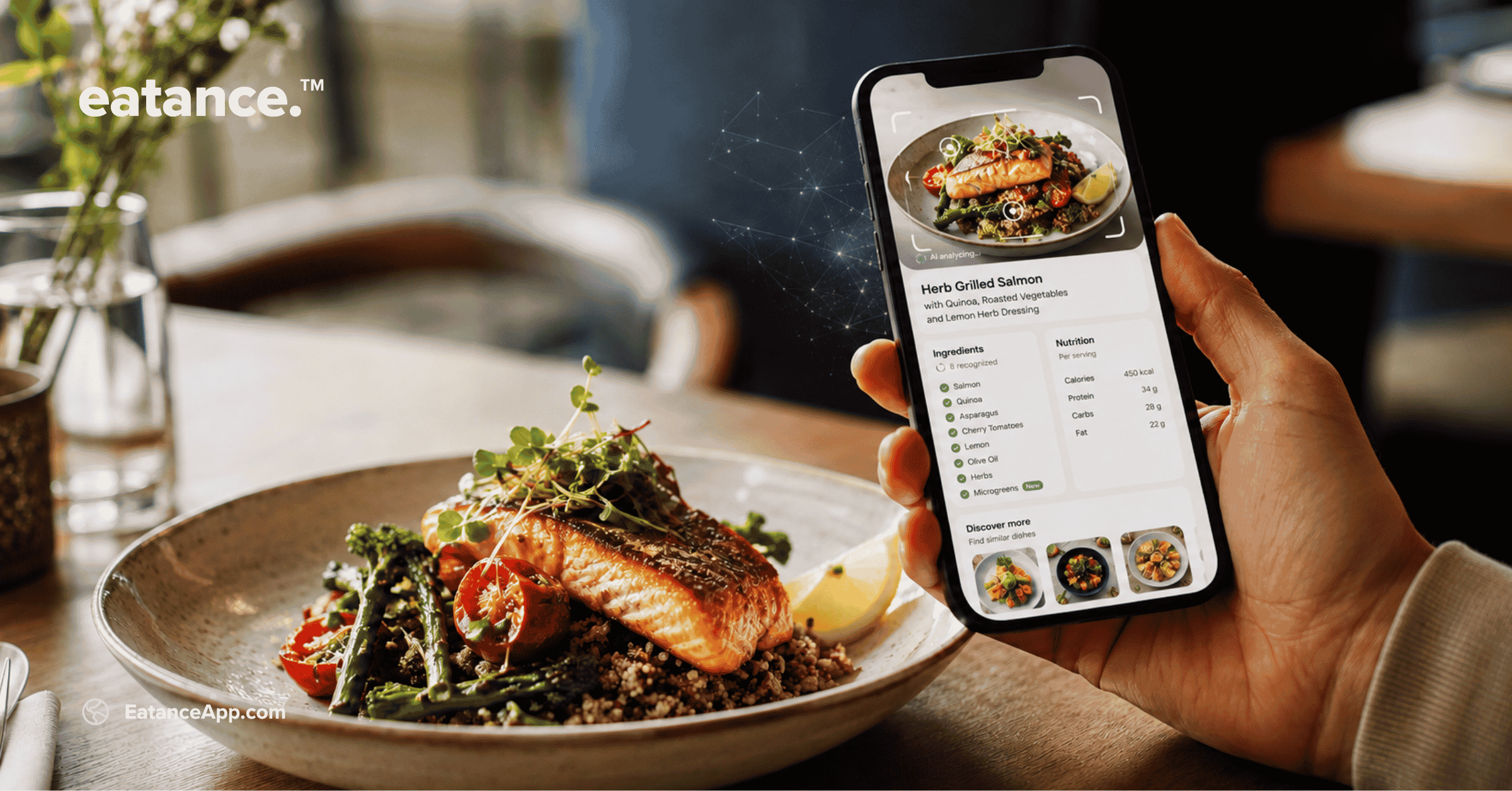
You might spot something tempting in a travel video, a social post, or an old food photo and know exactly what you want, but not what to type into a search bar. AI food recognition is changing that by allowing images themselves to become part of the discovery process.
Using computer vision and machine learning, AI can analyze a food image, identify the likely dish, and connect that visual cue with relevant options. This opens the door to a more intuitive form of visual food search, where discovery can begin with what customers see rather than what they know how to describe.
In this blog, we explore how AI food recognition works, why traditional dish search can be limiting, where food scanning is most useful, the challenges behind accurate recognition, and how platforms such as Eatance MRP 3.0 are bringing Food Scan into the actual ordering journey.
What Is AI Food Recognition?
AI food recognition uses artificial intelligence, computer vision, and machine learning to identify foods or dishes from photographs.
The system is trained on large collections of labeled food images and learns visual patterns such as shape, color, texture, ingredients, toppings, and presentation. When a new image is uploaded, it analyzes these characteristics and predicts the most likely dish.
A simplified process looks like this:
Image → Detect Food → Identify Likely Dish → Match Relevant Results
Modern food image recognition may first detect the food within an image and then classify it into the most likely category.
However, recognition and discovery are not the same.
Food recognition answers:
"What food is shown in this picture?"
Food discovery goes one step further:
"Where can I find this dish?"
That is where an AI food scanner becomes especially useful in restaurant and ordering experiences.
Why Traditional Dish Discovery Can Be Difficult
Quick Stat:
According to a 2025 YouGov survey commissioned by Yelp, 4 in 5 diners said photos of menu items would help them decide what to order.
Finding food online is easy when you know exactly what to search for. The challenge begins when you know what a dish looks like, but not what it is called.
- You know the dish by sight
A dish may catch your attention on social media, while traveling, or at another restaurant, but without its name, searching for it can become guesswork. - Names are not always consistent
The same dish may have different spellings, translations, regional names, or restaurant-specific descriptions, making it harder to find through keywords alone. - Text search depends on how well you describe it
If you do not know the exact dish name, you may end up typing broad descriptions that return unrelated results. - Too many options can make browsing slower
On large food platforms, users may need to open several restaurant menus before finding the dish they actually want.
This is where visual food search can help. Instead of starting with the right words, users can start with the image itself.
How AI-Powered Food Scan Simplifies Food Search and Ordering
A typical Food Scan experience follows four simple steps, moving from an image to relevant dish options.
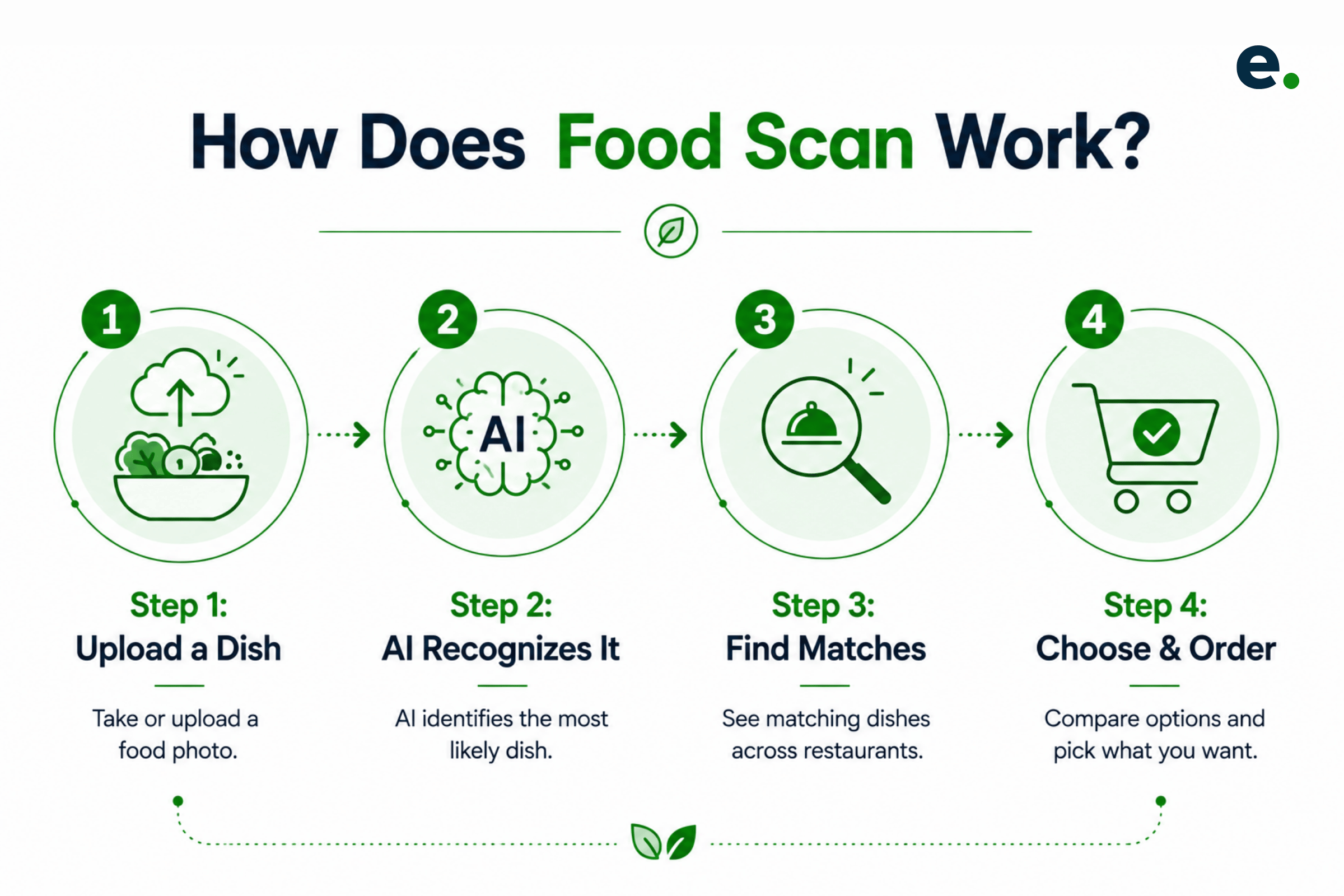
How Food Scan Uses AI to Identify and Find Meals
Step 1: Capture or Upload the Dish
The user takes a new photo of a dish or uploads an existing food image. Instead of typing the dish name or describing it with keywords, the image itself becomes the starting point for discovery.
Step 2: AI Recognizes the Food
The food recognition technology analyzes details such as shape, color, texture, visible ingredients, and presentation. It then compares these visual patterns with learned food categories to identify the most likely dish or closely related matches.
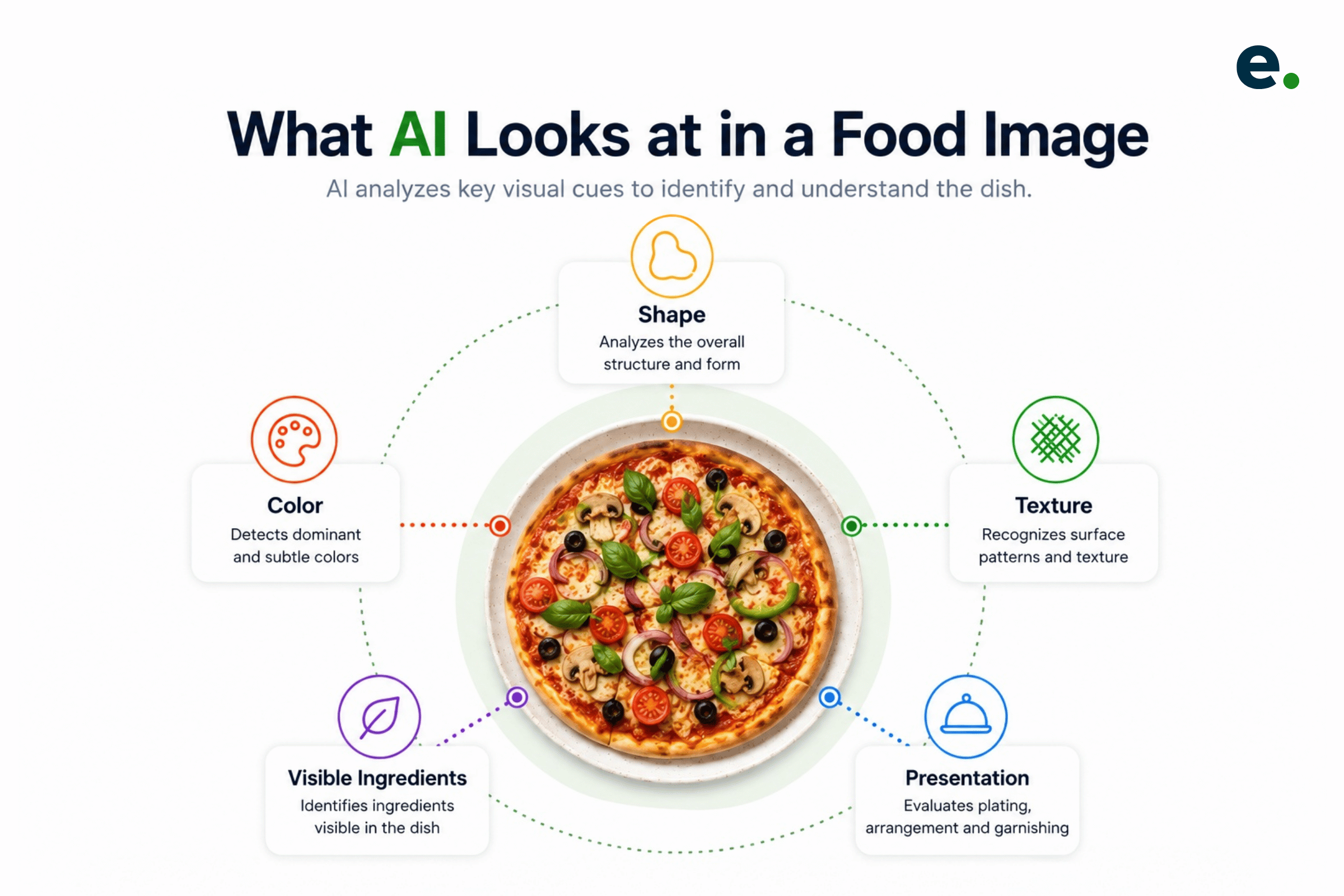
AI Food Recognition: Key Visual Features It Analyzes
Step 3: Match It With Available Dishes
Once the food is recognized, the result can be connected with restaurant menu data. For example, if the system identifies biryani, it can look for biryani or similar dishes available across participating restaurants.
Step 4: Explore and Choose
The user can then review relevant options and compare restaurants, prices, menu details, ratings, delivery availability, dietary information, and similar dishes before deciding what to order.
How AI Food Recognition Simplifies Dish Discovery
The real value of AI food recognition is not just identifying food in an image. It is helping users move faster from seeing a dish to finding where they can get it.
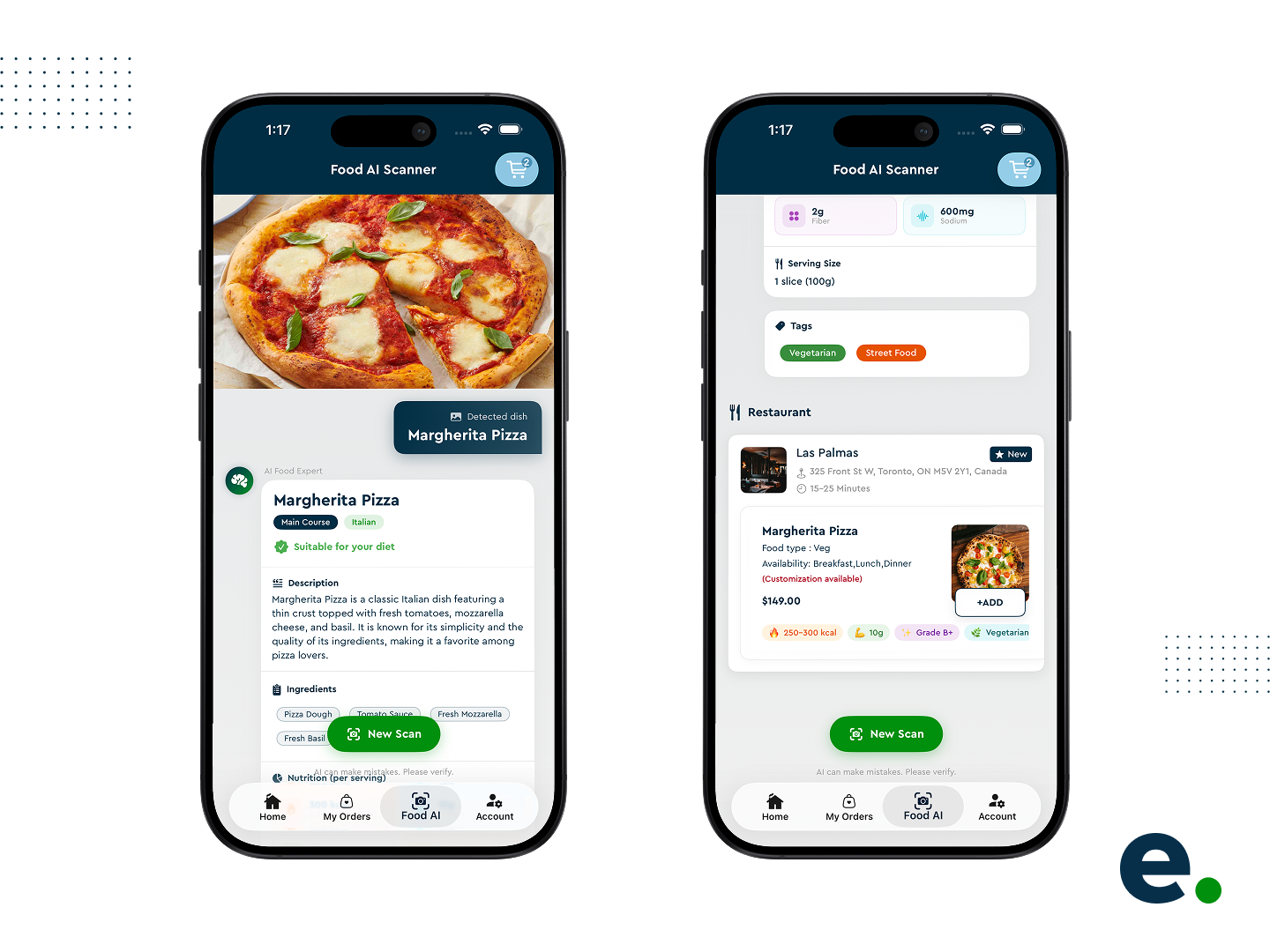
How AI Food Scan Identifies Meals and Finds Restaurants
Search Without Knowing the Dish Name
Users can start with an image instead of trying to remember or guess the dish name. This makes food image recognition useful for food discovered through social media, travel content, videos, or everyday experiences.
Turn Visual Inspiration Into Search
An AI food scanner can convert a food image into a searchable starting point, reducing the need to describe the dish manually before looking for restaurants that serve it.
Quick Stat:
According to TripAdvisor research cited in the International Journal of Hospitality Management, up to 60% of U.S. diners said user-generated photos influence their restaurant choices.
Reduce Menu Browsing
Instead of opening multiple restaurant menus, users can first find relevant dishes and then explore the restaurants offering them.
Enable Dish-First Discovery
Instead of starting with a restaurant and browsing its menu, users can begin with the dish they want and then explore matching options across restaurants. This makes discovery more aligned with the customer’s craving.
Where Food Recognition Can Be Useful in Everyday Food Discovery
The value becomes easier to understand through everyday situations.
Social Media Inspiration
A food photo or video can become the starting point for identifying a dish instead of searching through comments or guessing its name.
Travel and Food Memories
An old food photo can help users rediscover something they enjoyed while traveling and look for similar options again.
Exploring Unfamiliar Cuisines
Visual recognition can make it easier to explore dishes when users are unfamiliar with local names, spellings, or cuisine-specific terminology.
What Makes Food Recognition Challenging?
Despite the potential, AI food recognition is not perfect.
Food is particularly complex for computer vision because appearance can change dramatically depending on ingredients, recipes, preparation, presentation, and environment.
Similar-Looking Dishes
Many foods can look alike even when their ingredients and preparation are different. Curries, rice dishes, dumplings, pasta, and desserts can be especially difficult to distinguish visually.
Mixed and Layered Foods
Images only show what is visible. Hidden or overlapping ingredients in burritos, curries, salads, or bowls can make recognition more difficult.
Presentation Differences
The same dish can look very different depending on plating, garnishes, portion size, sauces, and preparation style.
Regional Variations
Recipes and presentation can vary across countries, regions, restaurants, and households, which can affect recognition accuracy.
Quick Stat:
According to Google Research, its FoodLens dataset included 30,000 food images covering more than 140 popular Indian dishes, reflecting the diversity and complexity involved in recognizing food across cuisines.
Image Quality
Lighting, camera angle, shadows, resolution, and background clutter can influence results. For this reason, food recognition technology should be treated as a tool for finding likely matches rather than guaranteeing a perfect identification every time.
What This Chart Shows
- 1,000 food images were tested by the recognition model.
- The blue line shows the model’s confidence for each prediction.
- The purple line marks the 0.8 confidence threshold.
- The model reported 99.2% recognition accuracy on this test set.
Food Recognition Is Only the Beginning
Identifying a dish is useful, but the real value comes from what happens next.
When recognition is connected with restaurant and menu data, users can move from simply identifying food to discovering where it is available, comparing options, and continuing toward an order.
Recognition identifies the food. A connected platform turns recognition into discovery.
What Could Visual Discovery Mean for Restaurants?
Customers benefit from simpler discovery, but restaurants can also gain another way for their food to be found.
Greater Visibility at the Dish Level
A customer may not know a restaurant's name but may be actively looking for something that restaurant serves.
Dish-led discovery gives individual menu items a greater role in attracting users.
More Opportunities for Less Familiar Dishes
Some excellent dishes are difficult to discover through conventional search because customers do not know their names.
Visual discovery could give such items another entry point.
Better Connection Between Images and Customer Intent
Restaurants already invest in menu photography because visual presentation influences food choices.
As AI-powered discovery develops, high-quality images and well-structured menu information may become useful not only for persuasion but also for machine-assisted discovery.
Another Way Into the Ordering Journey
This matters whether a business operates through an AI restaurant app, a marketplace, a white label food delivery app, or another digital ordering channel.
Customers increasingly expect multiple ways to discover what they want rather than following one fixed browsing journey.
How MRP Brings AI Food Scan Into Dish Discovery
Eatance MRP 3.0 brings AI food recognition directly into the ordering journey through its Food Scan capability. Instead of stopping at identifying a dish, the feature helps users move from an image to relevant restaurant options.
Photograph a Dish → Recognize It → Search Across Restaurants → Discover Matching Options
A customer can photograph a dish, and the system uses AI to identify it and search across participating restaurants for relevant matches. This turns visual recognition into a practical discovery experience rather than a standalone AI function.
Food Scan is part of a broader AI layer within MRP 3.0, alongside personalized recommendations, nutrition insights, dish comparison, predictive ordering, and voice ordering.
For businesses building a white label food delivery app, white label restaurant app, or multi restaurant app, this shows how AI can become part of the customer experience itself, helping users discover and evaluate food with less effort.
Bottom Line
People do not always know the name of the food they want.
Sometimes they simply know what it looks like.
AI food recognition provides a way to bridge that gap by allowing images to become part of the search and discovery process. Instead of forcing customers to translate visual interest into the right keywords, AI can interpret the image and guide them toward relevant possibilities.
The technology still faces challenges. Similar-looking dishes, mixed meals, regional variations, and poor image quality can make recognition difficult. But continued improvements in computer vision, richer food datasets, and better integration with menu information are making image-based discovery increasingly practical.
The most meaningful development may therefore be less about identifying food and more about what happens after identification.
Eatance MRP 3.0 applies this idea through Food Scan, connecting image recognition with restaurant discovery so users can move more naturally from seeing a dish to finding relevant ordering options. When an image can communicate a craving more clearly than words, giving customers the ability to simply show what they want could make discovering their next meal considerably easier.