![Multi Restaurant Aggregator [MRP]](https://eatanceapp.com/wp-content/uploads/2022/03/Hamburger.svg)



Food ordering apps have already made ordering faster. The next challenge is making the experience smarter.
Customers do not always know exactly what they want, what a dish is called, which option is better, or what they might want to order next. This is where AI food ordering is starting to change the experience by reducing some of the effort between deciding to eat and placing an order.
Instead of making customers do all the searching, comparing, and filtering themselves, AI can help the platform understand intent and guide them toward more relevant choices.
In this blog, we will look at how AI is changing the food ordering journey, the practical capabilities behind this shift, and what it could mean for restaurants and food delivery businesses.
Why the Traditional Food Ordering Experience Needs to Evolve
Online ordering made food delivery more convenient, but customers still face plenty of friction.
Common challenges include:
- Too many restaurants and menu choices
- Difficulty finding a dish without knowing its exact name
- Limited dietary and nutritional information
- Manual comparison between similar dishes
- Repetitive searching on every visit
- Multiple steps before checkout
Traditional ordering platforms rely heavily on categories, filters, and keywords. But customers do not always think that way. Someone may simply want something spicy, vegetarian, high in protein, affordable, or similar to a dish they saw online. That is where AI restaurant technology can make the experience more intuitive and personalized. The goal is not to remove customer choice. It is to reduce the effort required to reach the right choice.
“We always find consumers like to have curation or suggestions... as opposed to a literal menu of ‘here’s every possible option and permutation.’”
Quick Stat:
According to McKinsey, 71% of consumers expect companies to deliver personalized interactions, while 76% get frustrated when that does not happen.
How AI Is Changing Food Ordering
Quick Stat:
According to Salesforce’s State of the Connected Customer research, 62% of customers said they were open to companies using AI to improve their experiences.
AI is making food ordering more intent-driven.
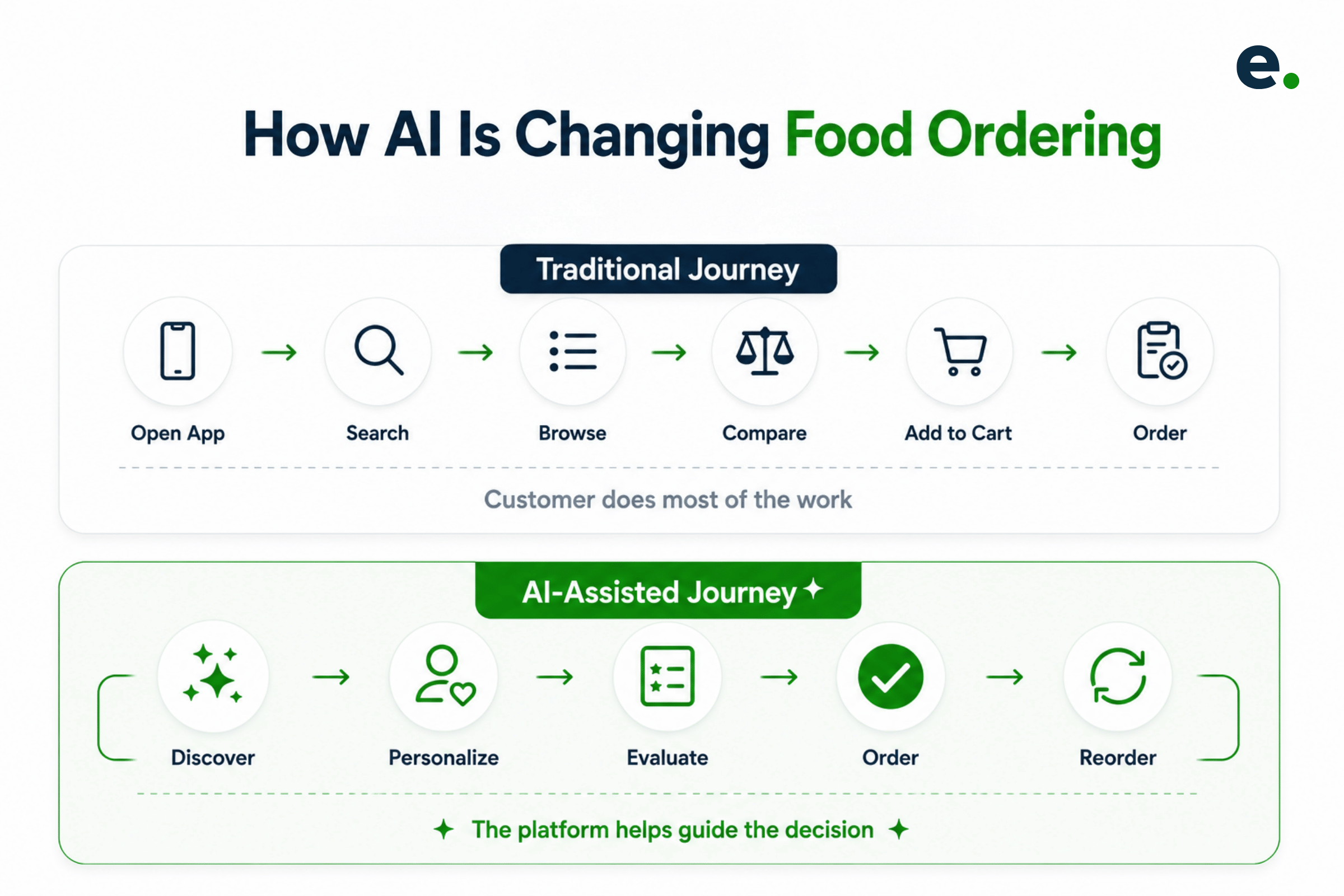
A traditional journey often looks like:
Customers can start with a photo, a craving, a dietary preference, a voice request, or past behavior.
That is the real shift behind AI-powered food ordering. The platform begins helping customers decide, not just showing them what is available.
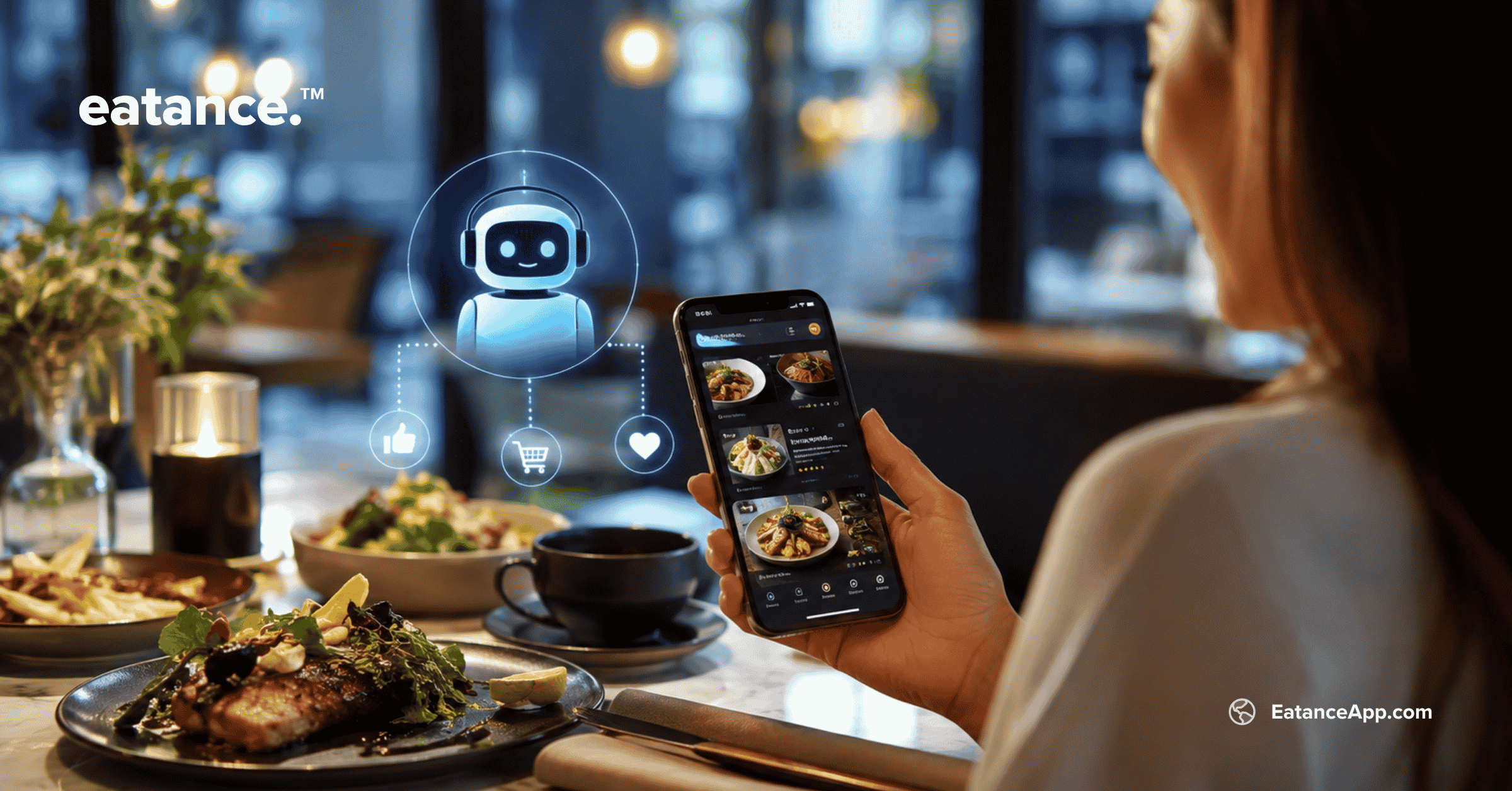
A capable AI ordering system can support several stages of the journey instead of functioning as one isolated recommendation tool.
Top AI Features Transforming the Food Ordering Experience
1. AI Food Scan Makes Dish Discovery Visual
Customers often see a dish they like without knowing what it is called.
AI Food Scan lets them photograph the dish and find matching options across restaurants on the platform.
Why it matters: Customers can move from seeing a dish to finding where they can order it without guessing search terms.
Key benefit: Faster and more intuitive food discovery.
This is one of the clearest examples of how AI food ordering can simplify the first step of the customer journey.
2. Smart Order & Diet Makes Recommendations More Personal
Customers do not always know the exact dish they want.
They may simply say:
- “I want something spicy but light.”
- “Show me a vegetarian dinner.”
- “I want something high in protein.”
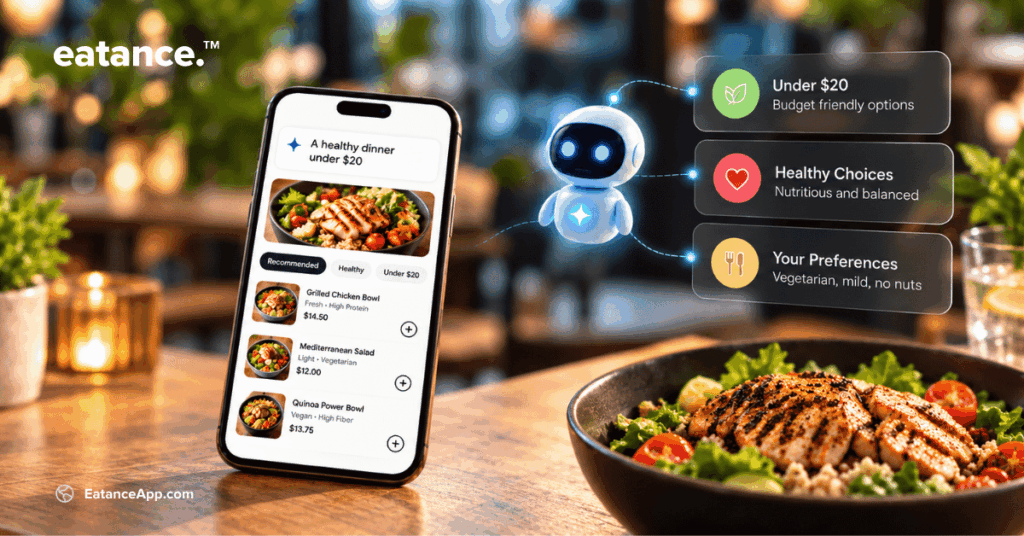
Smart Order & Diet understands these natural-language requests and uses AI food recommendations to suggest suitable dishes based on customer preferences and intent.
Why it matters: Customers can describe what they want instead of manually working through multiple filters.
Key benefit: More relevant recommendations with less browsing.
This makes AI restaurant ordering feel more conversational and personalized.
Quick Stat:
According to DoorDash’s 2025 Delivery Trends Report, 52% of diners are open to receiving AI-powered recommendations from restaurants or apps based on their past orders.
3. Smart Nutritional Composition Adds More Transparency
Nutritional information can be difficult to maintain manually across large menus.
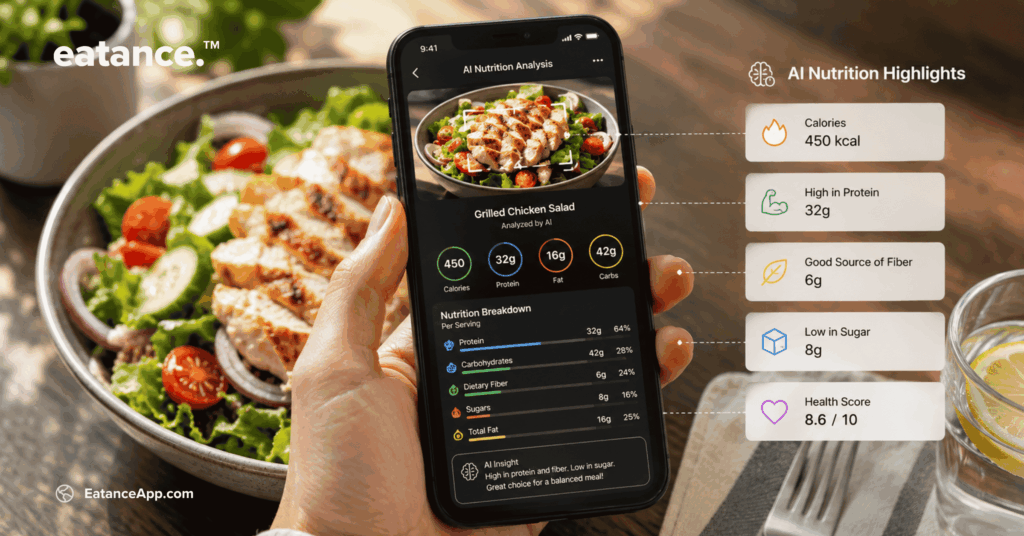
Smart Nutritional Composition uses AI to generate a nutritional breakdown for dishes without requiring restaurants to enter every detail manually.
Why it matters: Customers get useful nutrition information directly inside the ordering journey.
Key benefit: Better-informed food choices, particularly for health-focused diners.
It also shows how artificial intelligence in restaurants can improve more than recommendations. It can improve the information customers use to make decisions.
4. Compare & Decide Makes Restaurant Comparison Easier
The same dish may be available from several restaurants, but comparing those options manually can take time.
Compare & Decide lets customers compare the same dish across restaurants and receive an AI verdict on the best value.
Why it matters: Customers can evaluate options without repeatedly switching between restaurant listings.
Key benefit: Faster and easier decision-making.
This is especially useful within a multi restaurant online ordering system, where customers may have several similar choices.
5. Predictive Ordering Makes Reordering Smarter
Traditional apps may show order history, but Predictive Ordering goes further.
It learns customer ordering habits and surfaces relevant dishes at the right time.
Why it matters: Customers do not need to restart the discovery process on every visit.
Key benefit: Faster repeat ordering and more relevant recommendations.
For a multi restaurant app, this can make the overall experience more personalized across different restaurants.
6. Voice Ordering Reduces Ordering Friction
“Voice is a more natural way for people to interact with technology.”
- J. Patrick Doyle, Former President and CEO, Domino’s
Customers may not always want to type, search, and scroll.
Voice Ordering allows them to simply speak what they want. AI understands the request, finds matching dishes, and helps build the order.
Why it matters: It removes several manual steps from the ordering flow.
Key benefit: Faster, more convenient ordering with less effort.
As AI food ordering evolves, voice can become one of the most natural ways customers interact with a food delivery platform.
What the AI-Powered Ordering Journey Looks Like
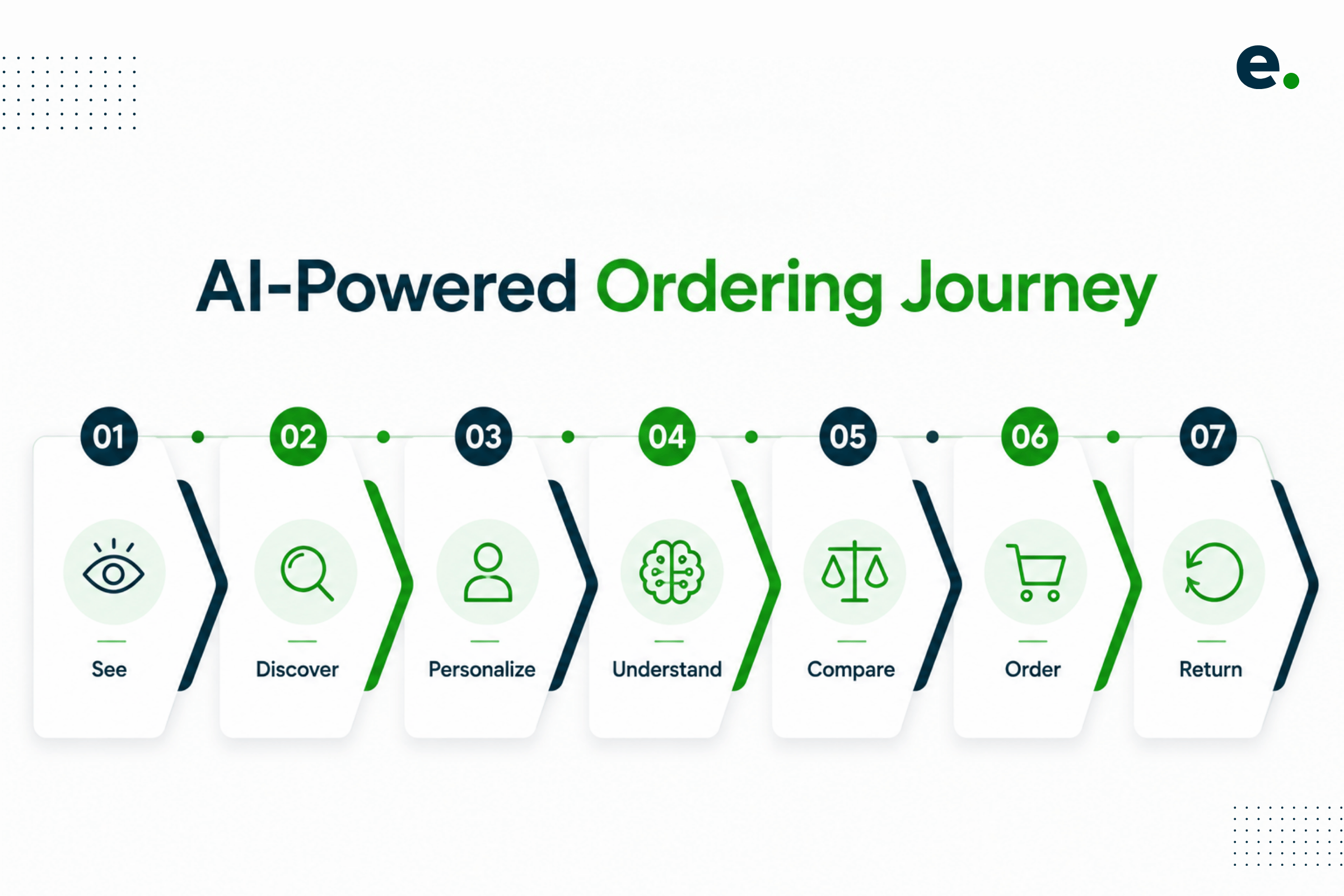
Each stage can be supported by a different capability. Food Scan helps customers discover dishes visually, Smart Order & Diet personalizes recommendations, Smart Nutritional Composition adds useful information, Compare & Decide simplifies evaluation, Voice Ordering reduces ordering effort, and Predictive Ordering makes future visits more relevant.
This connected experience is where AI food ordering becomes more valuable. Instead of adding isolated AI tools, intelligence can support several customer decisions throughout the journey.
This is where AI food ordering becomes more valuable. Instead of adding one standalone AI tool, intelligence supports several parts of the ordering journey.
Traditional Food Ordering vs AI-Driven Food Ordering
The difference becomes clearer when both experiences are compared directly.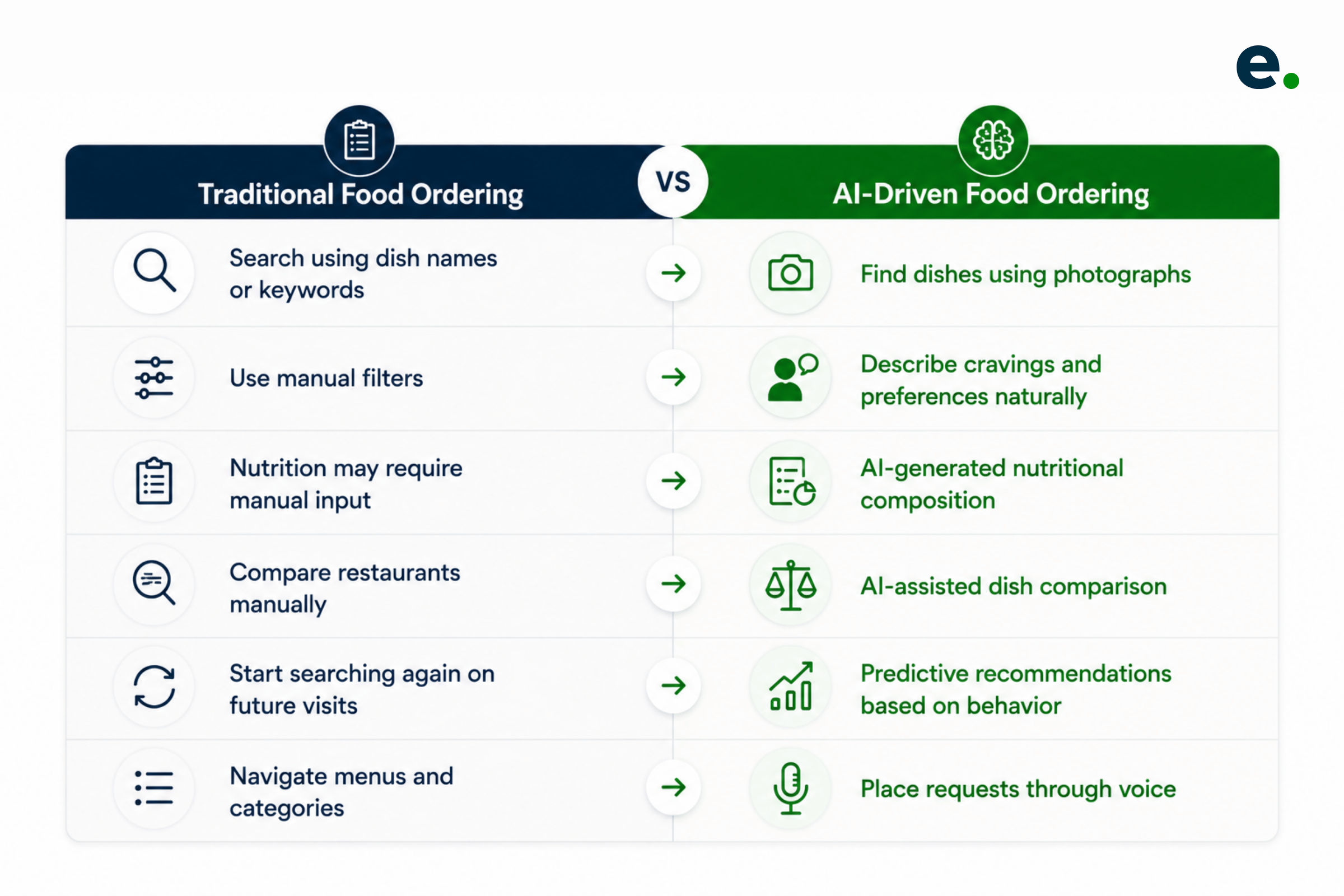
The difference is not simply more technology. It is a more direct path from customer intent to a relevant choice.
What AI-Powered Ordering Means for Restaurants and Food Delivery Businesses
AI changes more than the customer interface. It also gives restaurants, restaurant chains, and food delivery operators new ways to differentiate the experience they provide.
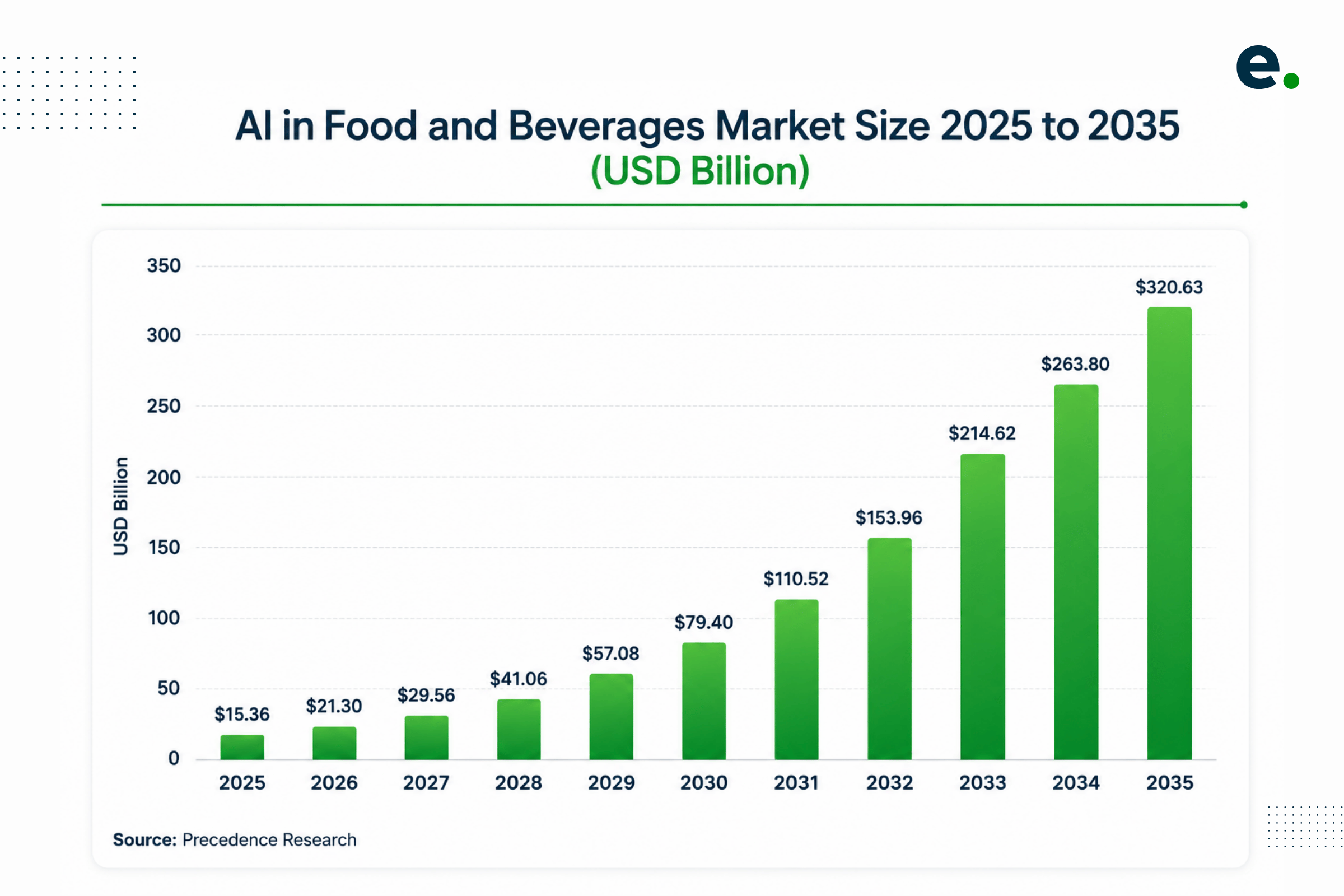
AI in Food and Beverage Market Size and Growth Forecast
Better Food Discovery
Customers are no longer limited to typing dish names or browsing restaurant menus.
They can discover food through images, natural-language requests, previous behavior, and voice.
That gives the platform more ways to connect customer intent with relevant dishes.
Faster Decision-Making
Choosing between similar dishes can take time.
AI-assisted comparison, nutrition insights, and more relevant recommendations can help customers narrow their options faster.
The platform becomes useful not only for discovery, but also for evaluation.
More Relevant Personalization
Traditional apps often show the same categories and popular items to large groups of users.
AI can make the experience more relevant to individual preferences, dietary requirements, cravings, and previous ordering behavior.
That makes the ordering journey feel less generic.
Reduced Ordering Friction
Every extra search, filter, screen, or comparison adds effort.
Visual search, voice ordering, predictive recommendations, and intent-based suggestions can reduce some of those manual steps.
The result is a smoother path from deciding what to eat to placing the order.
Stronger Repeat Experience
Returning customers should not have to start from the beginning every time.
Predictive Ordering can use previous behavior to surface more relevant dishes, making repeat visits faster and more personalized.
Quick Stat:
According to Deloitte’s 2024 Retail Industry Outlook, 50% of retail executives were prioritizing AI-driven personalized product recommendations.
A More Flexible Branded Experience
For businesses using a white label restaurant app, AI can become part of their own branded customer journey rather than being limited to the experience offered by a third-party marketplace.
This gives restaurants and food delivery operators more flexibility in how discovery, personalization, and ordering are presented to customers.
The value of AI is therefore not simply about adding advanced technology. It is about applying it where it can make food discovery, decision-making, and ordering easier.
How These AI Capabilities Come Together in Eatance MRP 3.0
For a long time, AI in food technology was mostly associated with backend use cases such as analytics, forecasting, and automation. That is now changing as AI becomes more visible in the customer-facing ordering journey itself.
Eatance MRP 3.0 reflects this shift by bringing six AI capabilities directly into the customer app:
- Food Scan
- Smart Order & Diet
- Smart Nutritional Composition
- Compare & Decide
- Predictive Ordering
- Voice Ordering
Each feature supports a different part of the ordering journey, from discovering a dish and narrowing down choices to comparing options, understanding nutrition, placing an order, and making future visits more relevant.
Rather than treating AI as a separate add-on, MRP 3.0 integrates these capabilities into the wider food ordering experience. The platform is also built with fully native Swift and Kotlin applications for iOS and Android, providing the technical foundation for these customer-facing features.
For entrepreneurs and restaurant chains, this shows how AI can become part of the everyday ordering experience instead of remaining a behind-the-scenes technology.
Explore Eatance Multi Restaurant Pro to see how these AI features fit into the complete multi-restaurant food delivery platform.
Bottom Line
The next stage of food ordering is not simply about showing more restaurants or adding more menu items. It is about understanding what the customer is actually trying to achieve.
A customer may want to find a dish they saw somewhere, discover food based on a craving, order according to dietary preferences, understand nutritional information, compare similar dishes, reorder something relevant, or simply speak instead of typing.
AI makes these interactions possible by shifting food ordering from a browsing-first experience toward an intent-first one. The customer still makes the final choice, but the platform can do more of the work involved in helping them get there.
As AI food ordering continues to evolve, food delivery platforms are likely to become more useful across the entire journey, from discovery and decision-making to ordering and repeat visits. For restaurants, restaurant chains, and food delivery entrepreneurs, the broader shift is becoming increasingly clear. The future of food ordering may not be about presenting customers with more choices. It may be about understanding their intent better and helping them reach the right choice with less effort.