![Multi Restaurant Aggregator [MRP]](https://eatanceapp.com/wp-content/uploads/2022/03/Hamburger.svg)



A customer opens a food ordering app, ready for dinner. One dish looks too expensive. Another has unclear ingredients. A third has a long delivery wait. Several minutes later, they are still scrolling. What is making a simple meal so difficult to choose?
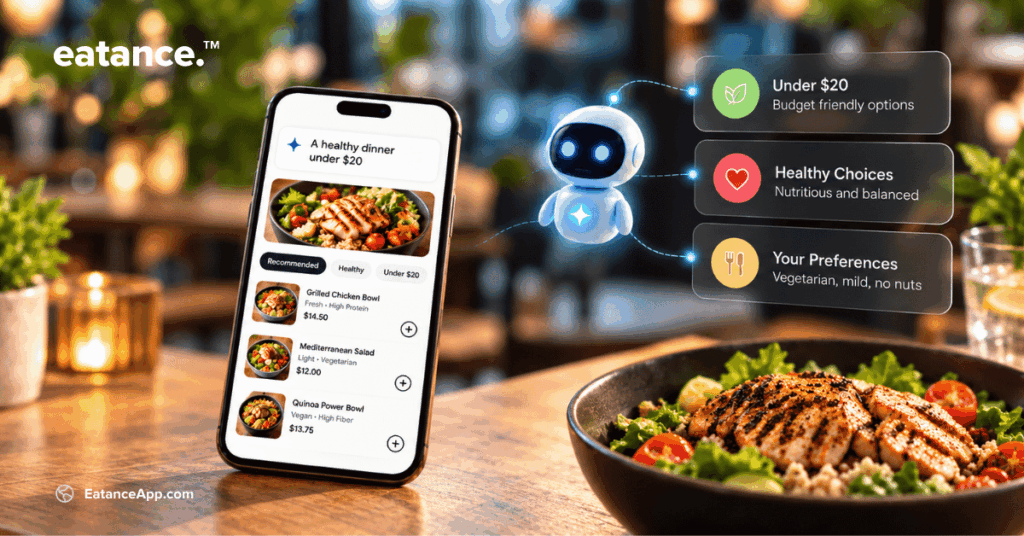
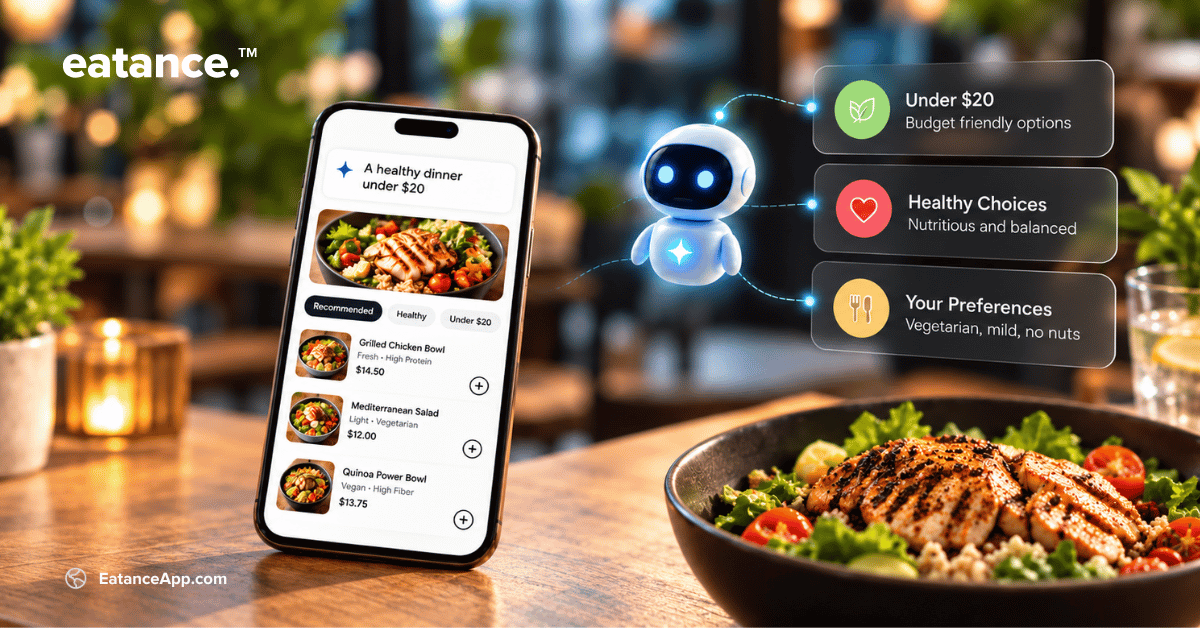
Each restaurant, dish, and customization adds another decision. When customers are hungry or short on time, that effort can make ordering feel tiring. A well-designed AI food ordering experience can help turn a request like “a mild vegetarian dinner under $20” into relevant options that are easier to compare. This blog explores how AI can simplify food decisions, what makes recommendations trustworthy, and how restaurants and platforms can measure whether choosing is getting easier.
What Is Decision Fatigue in Online Food Ordering?
Decision fatigue is the mental tiredness people can feel after making repeated choices. In online food ordering, customers may move from choosing a restaurant to comparing dishes, checking ingredients, selecting extras, and reviewing costs. Each step adds to the effort of deciding what to eat.
Choice overload is a related, however a different problem: difficulty choosing among many alternatives. Customers can experience both when they face a wide selection as well as, several decisions before the final checkout. However, variety itself is not always the issue, a customer craving a specific dish may find a large menu easy to navigate. Someone unsure what they want may struggle, especially when descriptions are unclear, or options are difficult to compare.
A meta-analysis covering 99 observations and 7,202 participants found that choice complexity, decision difficulty, as well as, uncertainty about preferences influence choice overload. This suggests that how choices are presented matters alongside with how many are available. For food platforms, the practical goal is to help customers find relevant options and understand their differences, making the decision easier.
Why Can Choosing a Meal Online Become Overwhelming?
Choosing a meal involves several decisions before the checkout. The effort increases when the customers must search for missing details or reconsider choices as new information appears.
Several Choices Before Selecting a Meal
Customers choose a restaurant or cuisine, find a dish that suits their appetite as well as preferences, and also select sizes, sides, sauces, or extras. Each choice adds another step, especially when they are unsure what they want.
Inconsistent Information Across Menus
One restaurant may clearly list ingredients and portion details, while another provides only a dish name and photo. In a multi-restaurant app, these differences make comparisons harder and can require repeated switching between menus.
Costs That Become Clear Later
A dish may initially appear within budget, but extras, delivery fees, and other charges can change the total. Customers may then return to the menu and reconsider their selection.
Tradeoffs Between Suitable Options
The preferred dish may have a longer delivery estimate, while a quicker option may cost more or offer fewer customizations. Customers must weigh these differences before deciding.
A better online food ordering experience helps customers find suitable options, compare relevant details, and understand the likely cost earlier in the journey.
How Can AI Reduce the Effort of Choosing Food?
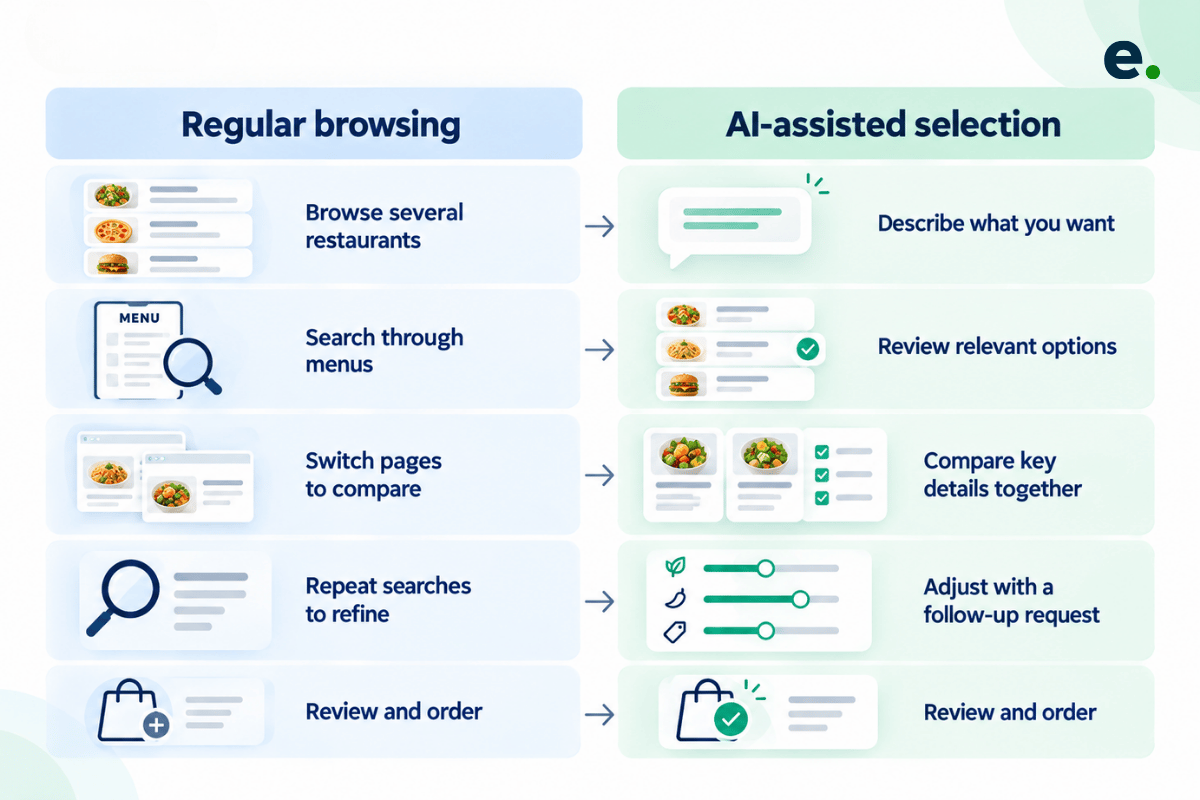
AI can make meal selection easier by helping customers describe what they want, narrow their options, compare dishes, and refine their choices. Each capability should reduce a specific task in the ordering journey.
Also Read: How AI Is Transforming the Food Ordering Experience
Benefits of AI-Assisted Food Ordering for Customers
Quick Stat:
According to DoorDash’s 2026 Restaurant Industry Trends Report, 22% of surveyed U.S. consumers had used an AI tool such as ChatGPT or Google Gemini to help choose a restaurant
1. Understand What Customers Want
Customers often think in terms of appetite, flavor, and budget rather than menu categories. A request such as “Show me a mild vegetarian dinner under $20” combines several preferences in one sentence.
An AI assistant can interpret those preferences and search available menu information for suitable matches. If the budget is unclear, it can ask whether $20 refers to the dish price or the complete delivered order.
This gives customers a more direct way to find food while keeping standard searches and filters available.
2. Present a Relevant Shortlist
Useful AI menu recommendations bring suitable dishes forward instead of creating another long list to browse. Suggestions can include brief explanations, such as “matches your mild-flavor preference” or “within your dish-price budget,” where the menu information supports them.
A restaurant recommendation system can also consider opening hours, delivery coverage, and item availability. A dish that matches someone’s tastes is only useful if they can order it.
The shortlist should offer enough variety to support a meaningful choice, with options to see more results, change preferences, or browse the full menu.
3. Make Differences Between Dishes Clear
Customers may find several suitable dishes but still struggle to choose between them. AI can help organize available prices, ingredients, portion details, supported customizations, and delivery estimates into a consistent comparison.
For example, two vegetarian bowls may have similar prices, but one includes a side while the other charges extra. Highlighting that difference can reduce repeated switching between menu pages.
Comparisons should explain their basis and acknowledge missing details. A lower listed price does not automatically mean better value, particularly when portion sizes or included items are unknown.
4. Use Previous Orders as a Starting Point
Food ordering personalization can use previous orders and saved preferences to help returning customers avoid starting from scratch. Someone who regularly orders a vegetarian lunch might see their familiar meal alongside relevant alternatives.
Past behavior should support the current request. If that customer wants something milder or less expensive today, the suggestions should reflect the change.
Customers should be able to update preferences, dismiss recommendations, and explore new dishes. Familiar orders also need current price and availability checks before they are suggested again.
Quick Stat:
McKinsey’s research found that 71% of consumers expected personalized interactions, while 76% felt frustrated when companies did not provide them.
5. Refine Suggestions Without Restarting
Customers often clarify their preferences after seeing the first suggestions. Follow-up requests such as “something less spicy” or “show me a cheaper option” can help them move closer to a decision.
A conversational interface can update the results while retaining relevant details from the original request, including dietary preferences and budget. This reduces the need to repeat searches or rebuild filters.
Voice can provide another way to communicate these changes. Effective intelligent food ordering should make the interpreted request visible, allow easy corrections, and let customers review the final selection before confirming their order.
What Could an AI-Assisted Ordering Journey Look Like?
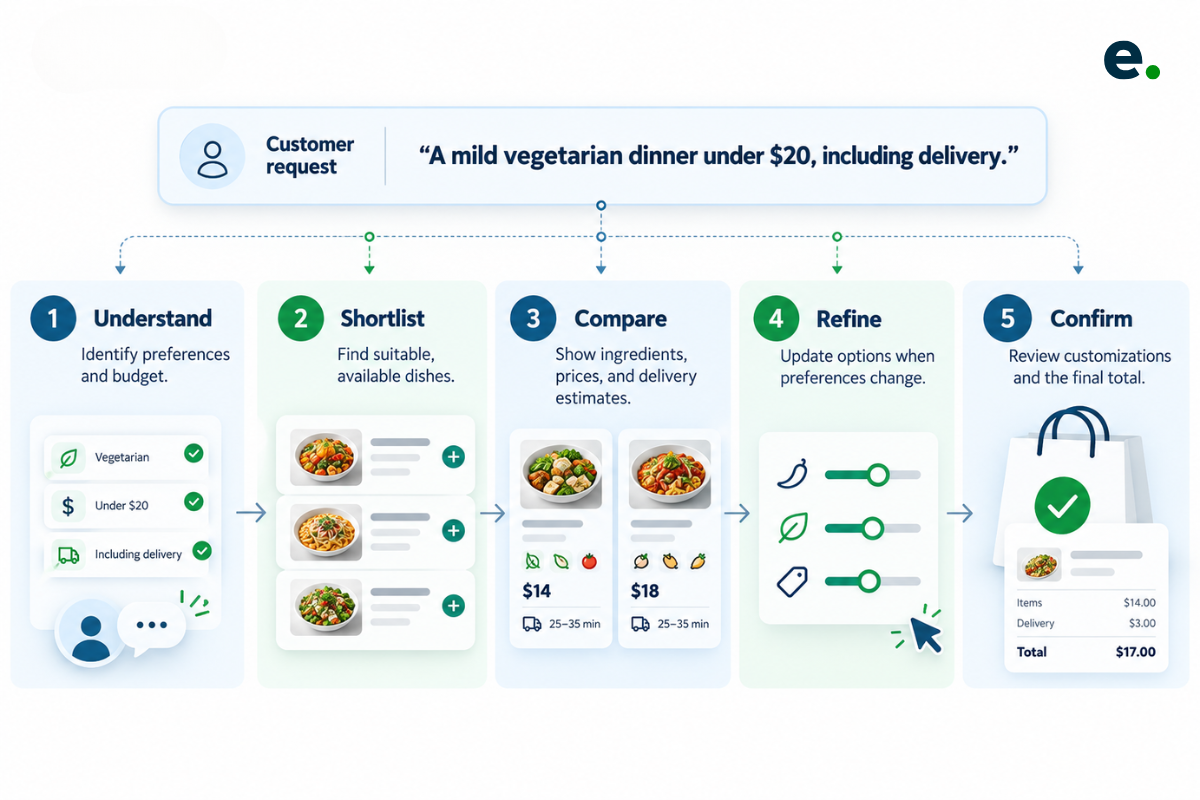
AI Food Ordering Process From Customer Request to Checkout
Consider a hypothetical customer ordering dinner after work. They want a mild vegetarian meal and have a $20 budget for the complete order.
This example illustrates a possible experience, rather than a documented customer result. The benefit comes from connecting decisions. Customers can express a need, compare relevant options, and refine the request without repeatedly navigating restaurant menus. Where complete costs are not yet available, the platform should clearly distinguish an estimated total from the confirmed checkout amount.
What Makes AI Food Recommendations Useful and Trustworthy?
Reliable recommendations start with reliable menu information. Descriptions should identify important ingredients, preparation methods, sauces, and available choices. Restaurant-confirmed dietary tags help the system match requests more consistently than dish names alone.
Missing information must remain visible. If mushrooms are absent from a short description, that does not establish that a dish contains no mushrooms. Similarly, a vegetarian label does not establish suitability for every dietary restriction.
For allergy-related requests, customers should confirm ingredients and preparation practices directly with the restaurant. The assistant should not turn incomplete menu information into a safety guarantee. Prices, availability, and customization options also need regular updates. Recommending an unavailable dish or unsupported substitution creates extra work and undermines confidence.
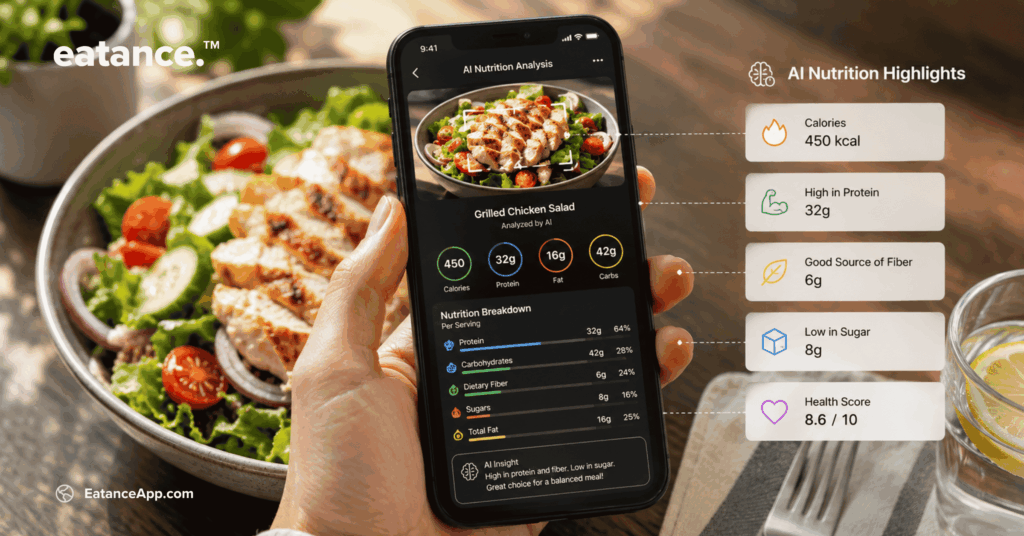
If nutrition information appears, the platform should distinguish restaurant-provided values from AI estimates. Trust also depends on understandable personalization. Customers should know why a dish appears and have controls for changing saved preferences. Platforms should explain what customer information they use and provide clear choices about personalization.
The quality of AI restaurant technology is therefore closely connected to the quality of the information and controls supporting it.
Also Read: AI Food Recognition - How Food Scan Can Simplify Dish Discovery
When Can AI Make Food Ordering More Complicated?
AI can increase decision effort when it adds distractions or makes simple tasks take longer. Common problems include:
- Too many suggestions: Multiple recommendation panels create more options to compare without helping customers narrow their choices.
- Excessive questions: Repeated prompts before showing useful results can make assistance feel slower than browsing.
- Irrelevant upsells: Add-ons that conflict with the customer’s budget or preferences introduce unnecessary decisions.
- Outdated preferences: Suggestions that ignore recent changes force customers to repeat or correct their requests.
- Unclear rankings: Unexplained recommendations make it difficult to distinguish relevant matches from sponsored placements.
Platforms should keep assistance optional, ask only useful questions, and also preserve access to menus as well as filters. When information is missing, the assistant should explain limitation and also offer a clear next steps.
What Could Easier Food Decisions Mean for Restaurants and Platforms?
Making selection easier can help customers discover dishes that suit them, compare options confidently, and also, return to familiar meals conveniently. For restaurants, this may improve the visibility of relevant menu items beyond the bestsellers. A customer searching by ingredients or preferences might discover a dish they would otherwise have been overlook.
For delivery platforms, clearer comparisons and fewer unnecessary steps may support a smoother journey toward checkout.
These are potential benefits, not guaranteed outcomes. Recommendation quality, pricing, delivery coverage, checkout usability, and restaurant operations all influence customer behavior. The business goal should therefore include customer satisfaction with the choice, alongside completed orders. A quick purchase followed by disappointment is a poor measure of success.
How Can Platforms Measure Whether AI Is Helping?
Start with a baseline of the existing ordering journey, then compare similar customers as well as conditions after introducing assistance. Where practical, test the assisted experience against the existing version.
Useful measures include:
- Time to first selection: How long customers take to add their first dish.
- Search effort: Searches and menu pages viewed before selection.
- Browse-to-cart rate: How often browsing sessions lead to a cart addition.
- Completed-order rate: How often customers finish checkout.
- Customer feedback: Whether suggestions felt relevant and choosing felt easier.
Interpret these measures together. A fewer clicks could indicate helpful guidance, but could also reflect customers giving up. Longer browsing may mean exploration rather than difficulty. Separate first-time customers from returning customers because their information as well as needs differ. Also consider changes in promotions, restaurant availability, and delivery fees when comparing results. A short feedback question, such as “How easy was it to choose your meal?” can help connect observed behavior with the customer’s experience.
How Does Eatance Support Easier Food Decisions?
Eatance’s published MRP 3.0 capabilities include Smart Order & Diet, Compare & Decide, Predictive Ordering, and Voice Ordering.
Smart Order & Diet supports recommendations based on customers’ expressed cravings and dietary preferences. Compare & Decide supports dish comparisons across restaurants, while Predictive Ordering uses ordering habits to surface suggestions. Voice Ordering provides a spoken way to communicate requests.
These capabilities relate to different decision tasks: describing a need, evaluating alternatives, revisiting familiar choices, and expressing a request conveniently.
For businesses considering a white-label food delivery app, the evaluation should include how these features work with actual menus. A demonstration should show preference changes, unavailable items, unclear requests, and final order review. That helps operators assess how well the experience supports their customers and restaurant partners.
Bottom Line
Customers open a food ordering app to find a meal, but the effort of comparing options can slow them down. AI can help by turning their preferences into relevant suggestions, highlighting useful differences, as well as, letting them refine choices without repeating the search.
A better AI food ordering experience gives customers enough clarity to choose with confidence. Accurate menu information, understandable recommendations, as well as, control over the final order are crucial in making that happen. For restaurants and delivery platforms, the opportunity is to make the path from “What should I eat?” to “That’s what I want” feel easier.
Explore Eatance MRP 3.0 and book a demo to discover how AI-assisted ordering can support that journey.