Most people think food delivery is a solved market. Uber Eats, DoorDash, Grubhub, SkipTheDishes, and a few regional giants own it, and everyone else just lists on their apps.
We see it differently. After working with more than 1,400 businesses across 20+ countries, we keep seeing the same pattern. The big apps are built for the average customer in the average city. Everyone else gets overlooked.
That leaves a lot of room. Established delivery platforms charge restaurants commissions that can take a significant share of each order, while much of the customer relationship stays with the platform. Diners with specific needs, like halal, vegan, or high-protein meals, often have to search through broad listings to find suitable options. Many smaller towns have limited delivery coverage or none at all.
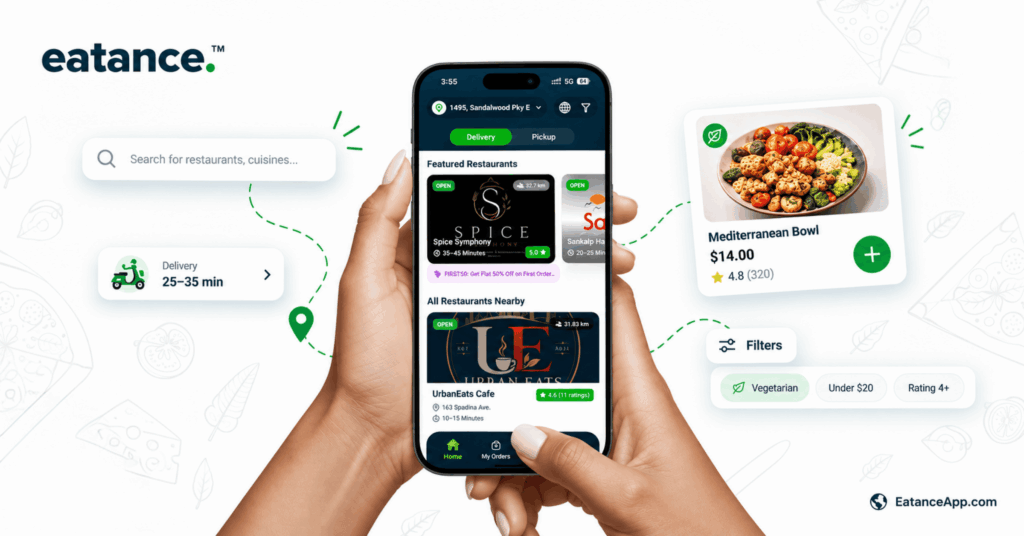
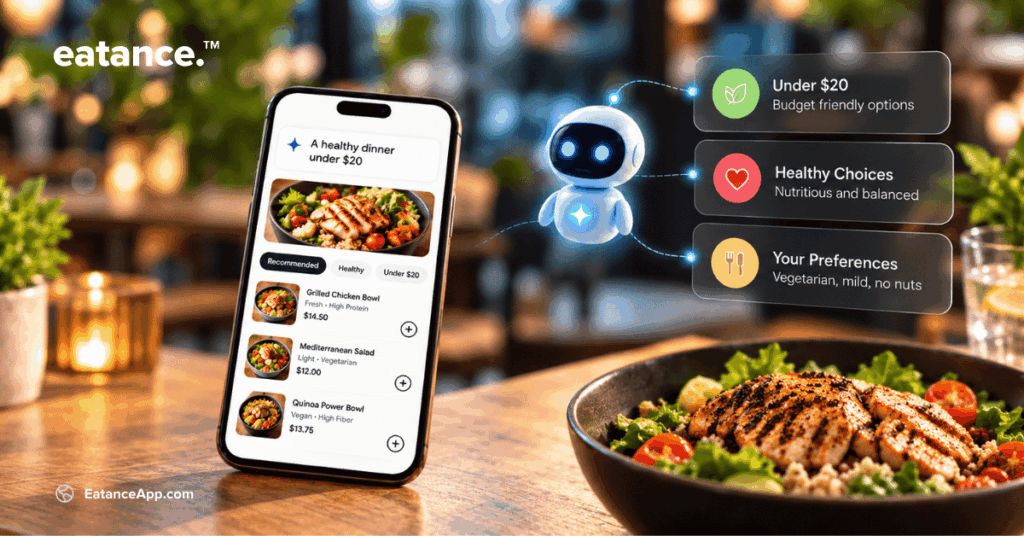
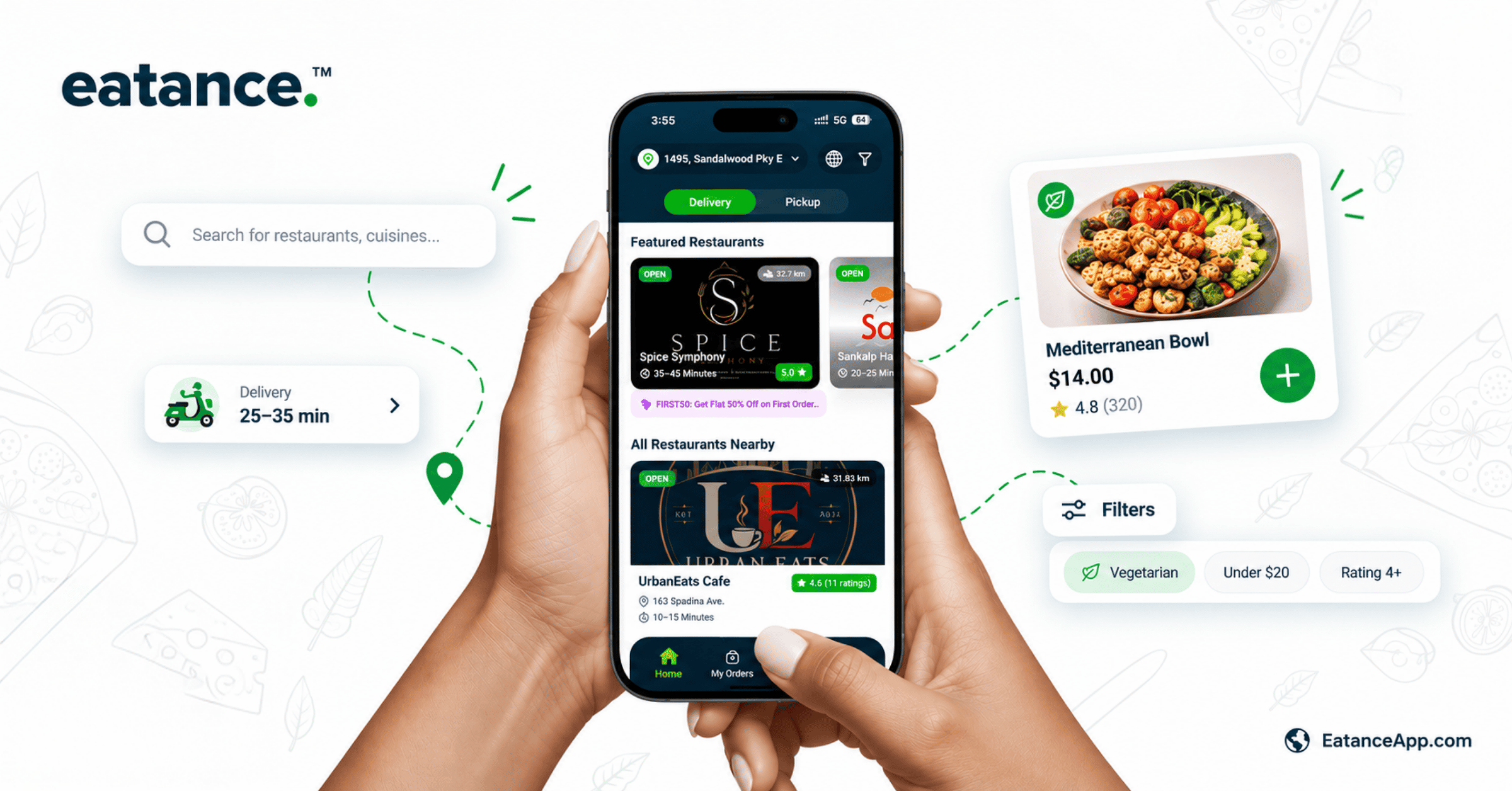
At the same time, building your own platform has never been easier. With Eatance MRP 3.0, AI lives inside the ordering app itself. Customers can snap a photo of a dish to find it nearby, describe their cravings and diet in plain words, or compare similar dishes across restaurants.
Below are 26 niches where a focused, owner-run delivery platform can compete with the giants. Some are big businesses. Some are community projects. All of them are open right now.
Part 1: Own Your Market
These models put the restaurant brand, local network, or regional operator at the center of the ordering experience. Instead of listing on someone else’s multi-restaurant food delivery app, the opportunity is to build a direct customer channel with a commercial model suited to the business.
1. Restaurant Chains
If you run five or more locations, you are probably paying an aggregator a serious share of every delivery order. Worse, the customer belongs to them. You can't email them, reward them or bring them back without paying again.
A white label food delivery app for your chain gives you one ordering channel across all locations. Customers order directly from the right branch, and you manage your own pricing, promotions, and loyalty.
How MRP fits: MRP brings all branches into one branded app, with zero commission, ownership of customer data, and loyalty features to build direct customer relationships.
Expert View:
Before we configure the platform, we map who controls menus, pricing, and customer access. Those permissions should follow how your business actually works.
- Shubham Mehta, Tech Lead, Eatance
2. Franchises and Country Master Franchises
Franchisors want brand control. Franchisees want local control. A master franchisee running a whole country wants both, plus their own currency, language, and pricing.
A dedicated platform for each territory can bring those needs together. Head office maintains a consistent brand, while local operators manage the menus, promotions, and delivery areas relevant to their customers.
How MRP fits: MRP’s store app includes multi-branch administration and a restaurant switcher, with built-in support for each country’s currency and language.
3. Cloud Kitchens and Virtual Brands
One kitchen, several brands. For a cloud kitchen, the app is the storefront. Each brand needs its own identity and menu, while marketplace commissions add to the cost of the orders it receives.
Your own app can present each brand as a separate restaurant within one platform, giving customers distinct choices and the business a direct ordering channel across its brands.
How MRP fits: MRP can list each brand as its own restaurant, all managed from one store app. Tasty Brands in Greece brings this model to life with Eatance, supporting 20+ cloud kitchens and reaching 15,000+ app downloads.
Market evidence: Dubai. In 2021, Gulf News reported approximately 400 cloud-kitchen brands operating from 80 UAE locations, mostly in Dubai.
4. City or Government-Backed Local Delivery
Cities and economic development agencies want to support local businesses. A shop-local food app can give residents a practical way to discover and order from restaurants in their region.
For a public body, ownership of the platform, code, and data can also matter. A city-backed initiative can turn a local promotion campaign into an ongoing service, with its ownership and operation shaped around regional needs.
How MRP fits: MRP can list each brand as its own restaurant, all managed from one store app. Tasty Brands in Athens, Greece, brings this model to life with Eatance, supporting 20+ cloud kitchens and reaching 15,000+ app downloads.
5. Restaurant Co-ops and Local Business Associations
Here is an idea we love. Instead of every restaurant in a town paying commission to an outside platform, they join together and own the delivery app themselves.
The money stays local, the fees stay low, and the restaurants decide the rules together. Business improvement areas and chambers of commerce are natural organizers.
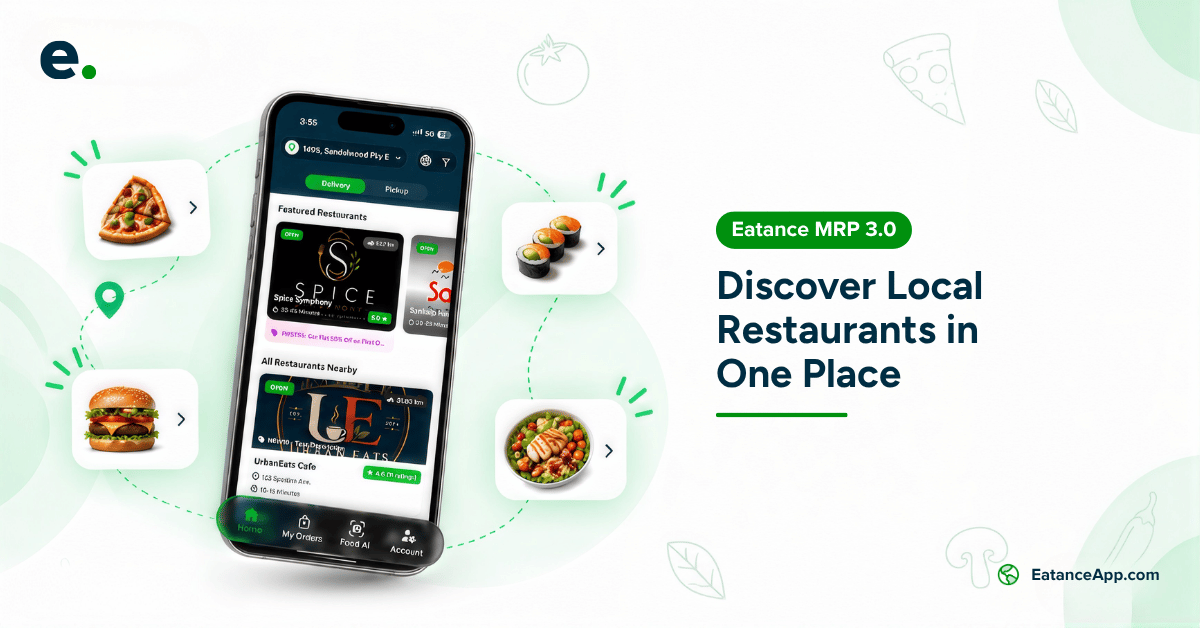
Discover the Best Local Restaurants in One App
How MRP fits: MRP gives the co-op a shared multi-restaurant food delivery app with unlimited restaurant listings and no per-restaurant fees. Members can bring their restaurants together under a shared local brand.
Part 2: Health and Lifestyle
Choosing meals around health goals or dietary preferences starts with clear food information. Customers need simple ways to find suitable options, supported by accurate ingredient and preparation details from restaurants.
6. Health and Nutrition Delivery
Calorie counters, macro trackers, and people who simply want to eat better all face the same problem on big apps. Nutrition information is hard to find, and filters are basic.
A platform built around nutrition brings those preferences into the ordering experience. Customers can describe what they want, such as a high-protein or lower-calorie meal, and explore relevant options with clearer food information.
How MRP fits: Smart Order supports calorie, protein, spice, and diet preferences expressed in plain language. Food Scan identifies a photographed dish and provides estimated nutrition information.
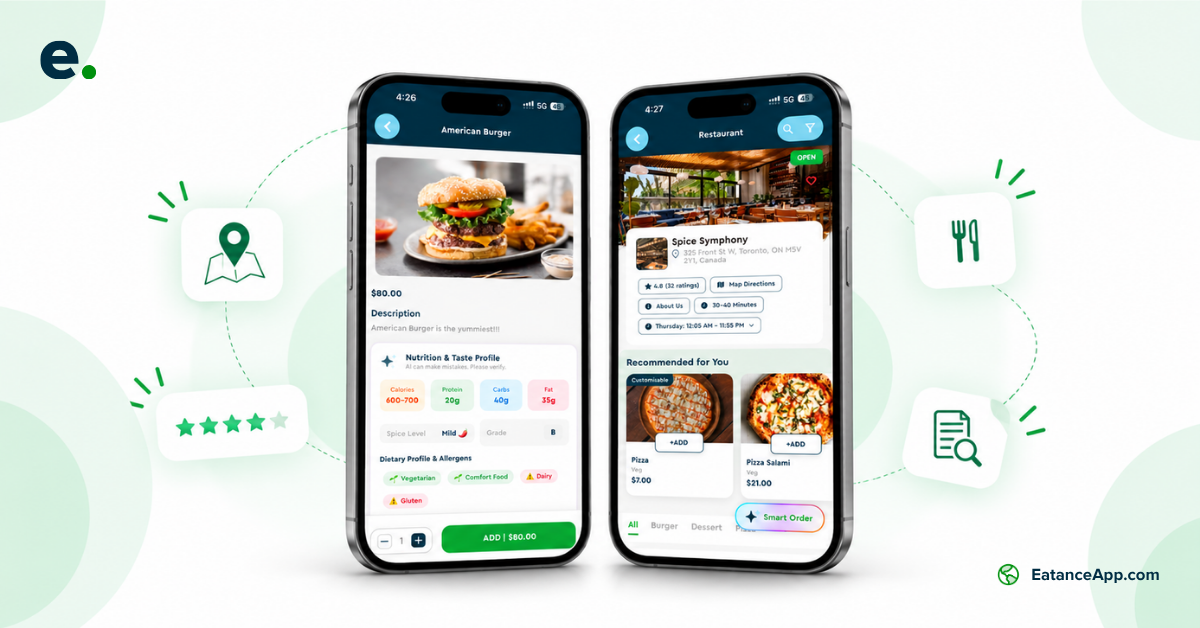
Personalized Food Delivery with AI Nutrition Insights
Market evidence: New York City. ClassPass’s NYC profile, updated in January 2026, reports that strength training accounts for nearly 30% of its city res ervations. This describes a potential fitness audience; demand for nutrition-led delivery needs separate validation.
Expert View:
AI recommendations are only as useful as the menu information behind them. Accurate ingredients and clear descriptions give customers a better basis for choosing.
- Pratik Patel, Team Lead, Eatance
Also Read: AI Nutrition Analysis: Making Food Information Smarter and More Accessible
7. Vegan and Plant-Based Marketplaces
Finding vegan food on a general ordering app can mean reading every menu and checking individual ingredients. A vegetarian label does not always help, since the dish may still contain dairy or eggs.
A dedicated vegan marketplace makes that search more focused, bringing together relevant restaurants and clearly described options so customers can find food that matches their preferences.
How MRP fits: Vegetarian indicators and Smart Order diet preferences are built in, and dedicated vegan tags can be added so customers can trust every listing. Restaurants confirm their own ingredients.
Market evidence: London and New York. HappyCow’s 2025 Vegan City Index ranks London first and New York sixth globally, making New York the highest-ranked North American city. That established food scene offers potential partners and customers, alongside existing competition.
Also Read: How AI Can Reduce Decision Fatigue in Online Food Ordering
8. High-Protein and Gym Meal Prep
Gyms already have the audience. Their members may care about protein, plan meals around training, and want convenient options they can order regularly.
Partnering with gyms and local meal-prep kitchens creates an opportunity for a members-focused app. Customers can order a post-training meal or arrange meals ahead for the week, building the service around their existing fitness routine.
How MRP fits: Smart Order helps customers find protein-focused meals, while scheduled orders let them book meals for the week in advance.
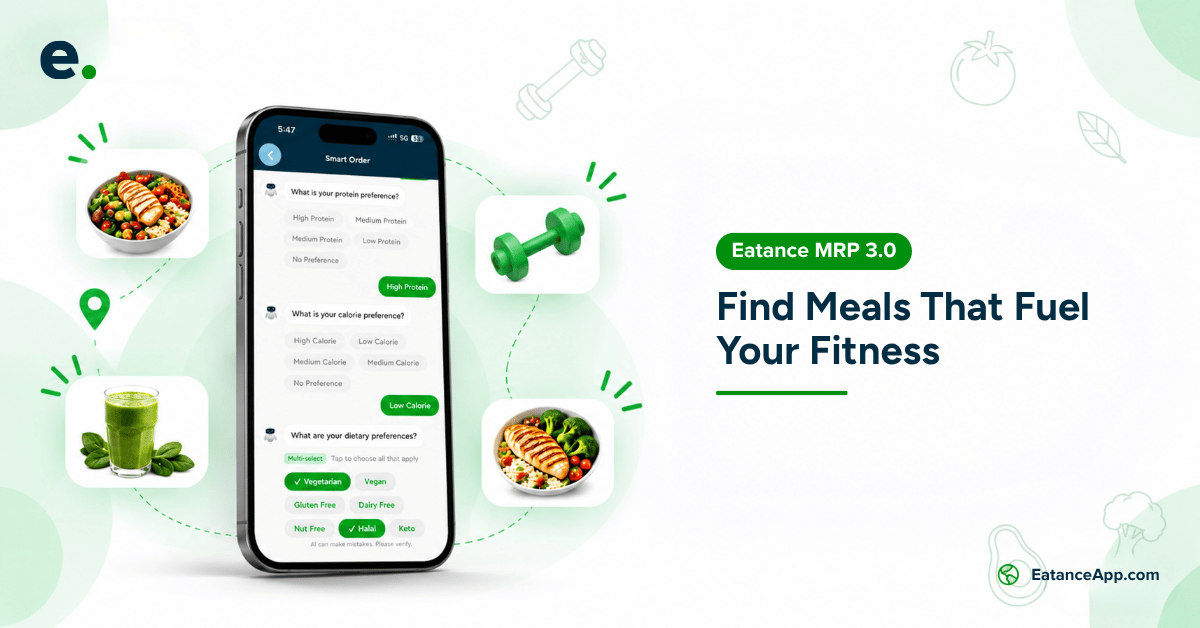
Find High-Protein and Low-Calorie Meals with AI Smart Order
9. Allergy-Friendly and Gluten-Free Marketplaces
For people with food allergies or celiac disease, ordering food can be difficult when ingredients and preparation practices are unclear.
A dedicated platform can bring together restaurants committed to providing clear information and explaining the requests they can accommodate. This niche depends on careful partners and accurate labeling, with customers confirming their individual requirements directly with the restaurant.
How MRP fits: MRP includes diet preferences and cooking instructions, and custom allergen tags can be built on that foundation. The app helps customers find the right restaurants; because safety depends on the kitchen, they should always confirm requirements before ordering.
Part 3: Faith and Culture
Food choices can reflect religious requirements, regional traditions, language, and cultural familiarity. A focused marketplace can serve these needs through clear classification, relevant restaurant selection, and dependable information.
10. Halal Marketplaces
For Muslim diners, a halal label on a general app often isn't enough. They want a platform where every restaurant is halal, so there is nothing to double-check. That trust turns into loyalty fast, and loyal users spread the word inside their community.
How MRP fits: MRP powers dedicated multi-restaurant marketplaces like Let’s Halal, a US multi-restaurant food delivery app built on Eatance that now lists 1,413 restaurants and has been featured in national news.
Market evidence: New York, Texas, and Toronto. Reporting based on the 2020 U.S. Religion Census places New York State first with approximately 724,000 Muslims and Texas fifth with approximately 313,000. In Toronto’s 2021 Census, 9.6% of city residents identified as Muslim. These demographics identify communities to research, while demand depends on local restaurant availability, customer expectations, and existing services.
11. Kosher Marketplaces
Kosher diners may find that suitable restaurants are spread out or difficult to identify on general apps. They also need clear certification information to understand whether an option meets their requirements.
A dedicated kosher marketplace can bring those restaurants and details together. Working with relevant local certifying bodies can help establish the standards behind the listings.
How MRP fits: A kosher marketplace can be built on MRP using the same model as Let’s Halal, with custom certification tags and supporting restaurant information. Certification checks and updates stay with the operator.
Market evidence: New York. UJA-Federation’s 2023 study estimated approximately 960,000 Jewish people in New York City. Across the wider eight-county study area, approximately 430,000 Jewish people lived in Orthodox households. These are different geographic scopes, and neither figure directly measures kosher-delivery demand.
12. Jain and Satvik Food
Customers looking for Jain or Satvik food may need more than a vegetarian filter. Ingredients such as onion and garlic, along with preparation practices, can affect suitability, while the two traditions have different requirements.
A focused platform can help communities in Gujarat, Canada, the USA, and the UK find clearly described dishes and restaurants willing to accommodate relevant requests. Jain and Satvik options should be classified separately.
How MRP fits: MRP includes vegetarian indicators and cooking instructions such as “no onion.” A dedicated Jain tag can be added to help customers identify suitable options.
Market evidence: Gujarat and Toronto. India’s 2011 Census recorded Jains as approximately 0.96% of Gujarat’s population. Statistics Canada counted 8,275 Jains in 2021, with three in five living in the Toronto area. Separately, 6.2% of Toronto city residents identified as Hindu, without implying identical dietary practices.
13. Diaspora and Ethnic Cuisine Marketplaces
African, Filipino, Caribbean and South Asian communities in North America and Europe often know exactly which small restaurants serve the food they grew up with. The big apps rarely surface them.
A marketplace focused on a cuisine or community can make discovery more familiar, using relevant dish names, regional categories, and preferred languages to connect customers with local restaurants.
How MRP fits: MRP includes multilingual support. Food Scan helps customers identify an unfamiliar dish from a photograph and explore restaurants serving it, supporting discovery by customers beyond the core community. Eatance’s La Paan Villa case study provides a related example of digital ordering for an Indian-food business in Montreal.
Market evidence: Toronto and London. Toronto’s 2021 Census recorded immigrants as 46.6% of city residents, while 6.2% identified as Filipino. In London, 40.6% of residents were born outside the UK. These 2021 figures highlight diverse communities that cuisine-focused marketplaces could serve.
Also Read: AI Food Recognition: How Food Scan Can Simplify Dish Discovery
Part 4: Places and Communities
A platform can be valuable because it understands one location particularly well. Campuses, venues, hotels, and residential communities each have their own ordering windows, collection arrangements, and service boundaries.
14. Food Parks and Food Halls
A food hall brings many vendors into one place, but visitors may have to walk the whole floor to compare menus before joining an ordering line.
An app for the venue puts those choices in one place. Visitors can browse each vendor’s menu, order ahead, and collect their food, while vendors retain their own identities within the shared experience.
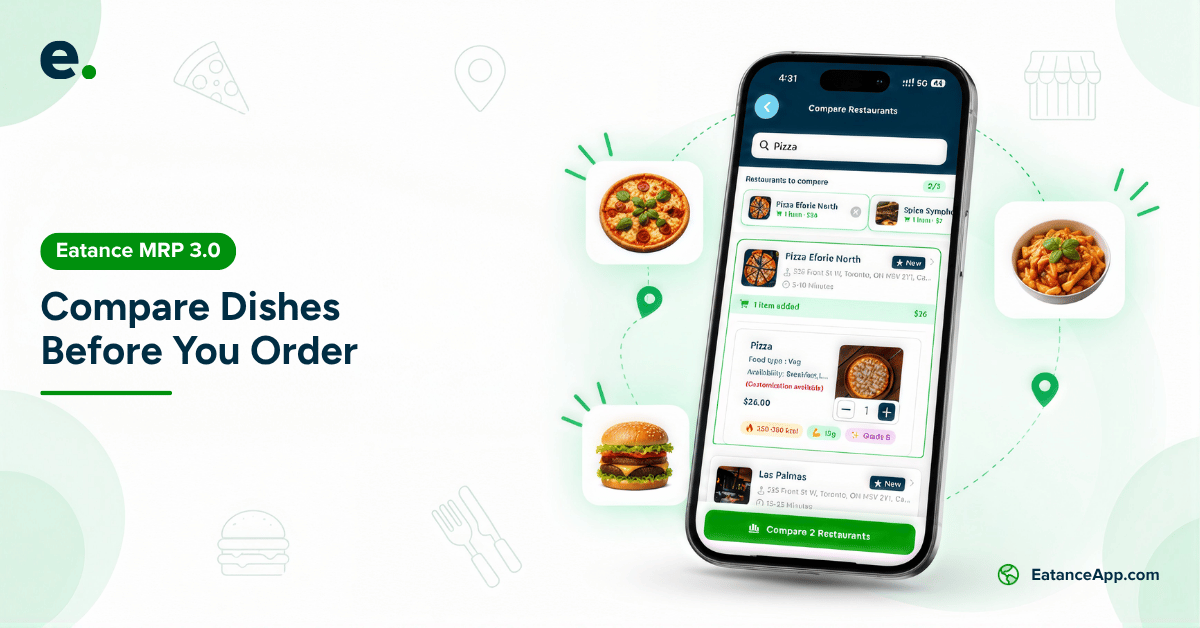
Smart Restaurant Comparison for Better Food Ordering
How MRP fits: MRP includes separate vendor listings and pickup ordering. Compare & Decide helps customers compare similar dishes across vendors. The standard cart holds items from one restaurant. A single checkout combining several vendors requires custom development, including coordinated handling of the resulting orders.
Market evidence: United States. Colicchio Consulting’s 2026 report tracks 458 operating food halls and reports 24.89% growth between 2023 and 2025. Its January 2026 pipeline includes 114 projects, with 11 planned in New York State.
15. University Campuses
Students are often on tight schedules and limited budgets. They want meals that fit between classes and are convenient to collect as they move around campus.
A campus app brings participating vendors, budget-friendly choices, and pickup ordering together. With student deals from campus vendors, it can quickly become the best app for restaurant discounts on campus.
How MRP fits: Pickup mode, scheduled orders, and Smart Order’s budget step are built in. Students can explore meals within a preferred budget and place orders ahead of collection.
Market evidence: Toronto and Bologna. The University of Toronto reported 103,140 students in 2025–26 across three Greater Toronto Area campuses. In Italy, the University of Bologna reports 97,235 students, including 11,302 international students, across five campuses in Bologna, Cesena, Forlì, Ravenna, and Rimini. These student communities offer potential markets for budget-friendly, order-ahead food platforms.
Also Read: How AI-Powered Food Recommendations Can Improve Restaurant Ordering
16. Corporate Campuses and Tech Parks
Many employees share the same lunch hour, while nearby food options may be limited or busy at the same time.
An app for a business park lets people explore participating restaurants and order ahead for pickup or delivery at an agreed time. The opportunity starts with individual workplace meals and can expand into team ordering where the business needs it.
How MRP fits: MRP includes scheduled orders by date and time slot, so employees can order ahead and collect or receive their lunch at a set time. Delivery-zone management keeps service focused on the business park.
17. Gated Communities and Residential Towers
Large residential communities can function like small neighborhoods with their own service needs. A food delivery app run by a community partner or local operator can connect residents with selected restaurants.
The opportunity is to serve one defined area well, with relevant food choices and clear delivery arrangements that fit the community’s access points and residential buildings.
How MRP fits: MRP includes delivery-zone management to limit service to a selected community. Smart Order helps residents find meals matching their preferences from participating restaurants.
18. Stadiums, Festivals, and Event Venues
Food queues can mean missing the best moments of a game or concert. An order-ahead app lets fans browse menus, order and pay on their phones, then collect their food when it’s ready.
How MRP fits: MRP includes pickup and scheduled ordering, so visitors can arrange food collection around the event. In-seat delivery can be built on the platform through custom development.
19. Hotels and Resorts
Travelers may not know the local food scene or speak the language. A hotel-branded app featuring selected nearby restaurants can help guests discover dishes and order through a familiar service.
It can complement the property’s existing food offering and, where suitable commercial arrangements are agreed, create an additional revenue opportunity for the hotel and its partners.
How MRP fits: MRP gives each property a white label food ordering app carrying the hotel’s own brand, with multilingual support so guests can order from nearby restaurants in their language.
Market evidence: Dubai. DET’s 2025 figures, reported in February 2026, show 19.59 million international overnight visitors and 154,264 hotel rooms across 827 establishments. These indicate hospitality scale, rather than an automatically available customer base.
Also Read: Voice Ordering for Restaurants: How AI Is Making Food Ordering Faster
20. Small Towns and Smaller Cities
Major delivery platforms may provide limited coverage in smaller towns, leaving customers with fewer convenient ways to order from local restaurants.
That creates an opportunity for an entrepreneur who knows the businesses, customers, and delivery distances in the area. A locally operated platform can bring those restaurants together, with demand and fulfillment costs assessed for the particular market.
How MRP fits: MRP offers a low-cost way to start, with a fully managed option where Eatance runs the infrastructure while you run the business.
Part 5: Delivery Models
The fulfillment model influences launch costs, customer expectations, and operational complexity. Pickup, late-night service, short-radius delivery, and advance bulk orders each create a different business opportunity.
Expert View:
Choose the delivery model before choosing extra features. Pickup, late-night delivery, and bulk orders each need a different order flow.
- Pratik Patel, Team Lead, Eatance
21. Midnight and Late-Night Delivery
Night-shift workers, nurses, students, and nightlife customers get hungry when many kitchens have closed. Finding the remaining options can take more effort on a general ordering app.
A late-night platform brings participating after-hours kitchens together around that specific ordering window. Its value is making available meals easier to discover and receive beyond conventional dinner hours.
How MRP fits: Eatance’s existing midnight-delivery module can be implemented on MRP to handle operating hours that cross midnight, with the customization scoped during setup.
Market evidence: New York City. A city study released in 2019, using 2016 economic data, identified more than 25,000 nightlife establishments and $35.1 billion in annual economic output. These historical figures illustrate scale, rather than current delivery demand.
22. Bicycle and eBike Delivery
In dense neighborhoods, bicycles and eBikes can handle short delivery trips and produce no tailpipe emissions.
A delivery brand built around these vehicles can appeal to customers and restaurants interested in lower-emission local transport. A short service radius helps keep the model practical, while environmental claims should reflect the vehicles and operating practices actually used.
How MRP fits: Driver and vehicle profiles and delivery-zone management are built in, so you can keep the radius tight.
Market evidence: Tel Aviv and Amsterdam. Tel Aviv’s municipal page describes approximately 190 km of cycling paths, while I amsterdam reports up to 400 km of bicycle paths in Amsterdam. These networks provide infrastructure relevant to short-radius bicycle and eBike food delivery.
23. Pickup-Only and Order-Ahead
The cheapest way to start a food ordering business is to skip delivery entirely. No driver fleet, no delivery costs, no logistics headaches.
Customers order and pay in the app, then collect when it's ready. It's a great way to prove demand before adding delivery later.
How MRP fits: MRP’s built-in pickup mode lets customers order and pay through the app, then collect from the restaurant. You can start without managing a delivery fleet and introduce delivery as the business grows.
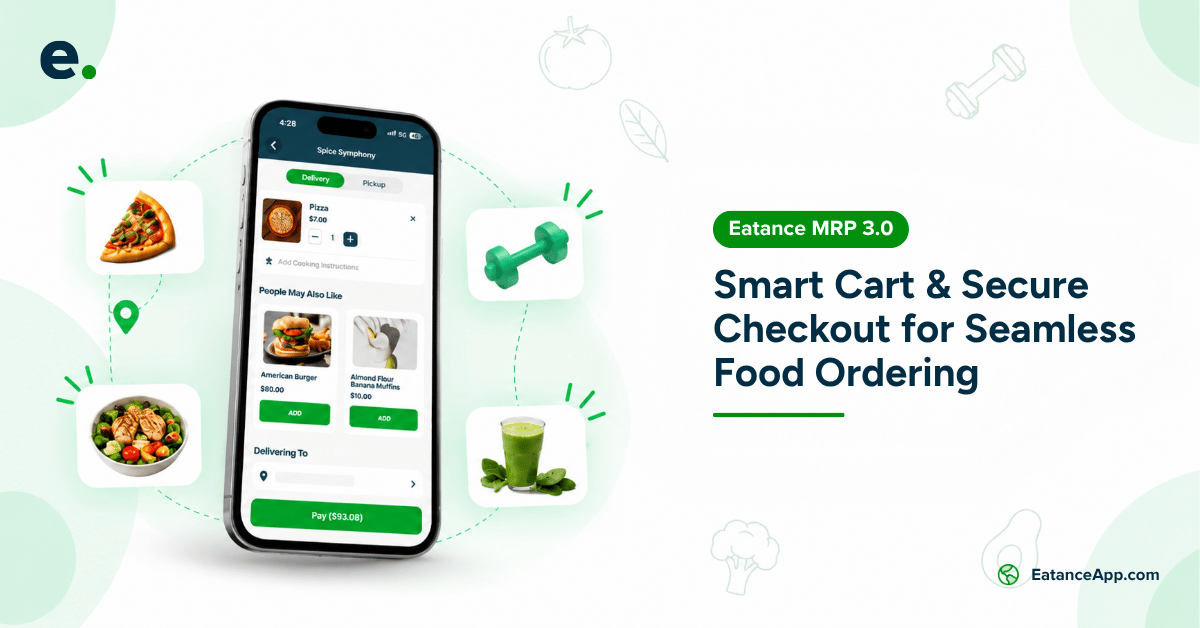
Smart Cart and Secure Checkout for Food Delivery Apps
24. Catering and Bulk Pre-Orders
Office lunches, birthday parties, religious festivals, and community events need larger orders planned in advance.
A platform focused on these occasions can make ordering easier for customers and give restaurants more notice. Straightforward bulk purchases can follow a scheduled ordering process, while larger or specialized requests may need a quotation agreed with the restaurant.
How MRP fits: MRP lets customers schedule catering and bulk orders for a selected date and time slot. Custom quotation workflows can be built on the platform for larger orders that need individually agreed pricing.
Part 6: Impact
Food platforms can connect available meals with customers or organizations able to use them. These models need clear availability, collection, and accountability processes alongside convenient ordering.
25. Surplus Food Resale and Waste Reduction
Restaurants can finish the day with edible food that has not sold. A platform that offers this surplus at a discount gives businesses another sales opportunity, and customers access to lower-cost meals.
It connects available food with buyers before an agreed collection deadline. Reducing waste is central to the model, while any claimed carbon benefits need an appropriate measurement approach.
How MRP fits: A surplus-food marketplace can be built on MRP so restaurants can sell unsold meals at a discount before closing. Tekeya in Egypt demonstrates this model, with 200,000+ downloads, 357 restaurants, and App of the Day recognition.
Market evidence: Global food waste. UNEP’s 2024 report estimates 1.05 billion tonnes of food waste in 2022, including inedible parts, with approximately 290 million tonnes, or 28%, in food service. Food loss and waste together generate an estimated 8 - 10% of global greenhouse gas emissions.
26. Surplus Meals Donated to Shelters and NGOs
Not every surplus meal needs to be sold. A platform that connects restaurants with shelters and food banks lets businesses donate what's left at the end of the day, with pickups arranged by the app.
It pairs naturally with a food waste marketplace, and it gives restaurant partners a CSR story worth telling.
How MRP fits: Donation workflows can be built on MRP’s ordering and driver modules to coordinate meal collection from restaurants and delivery to shelters and NGOs.
How to Pick Your Niche
You don't need to beat Uber Eats everywhere. You need to win one niche, in one place, better than anyone else. Ask yourself three questions:
- Do you already have access to the audience? A gym owner, a halal community leader or a campus insider starts with an unfair advantage.
- Is the niche badly served today? If customers have to dig through a general app to find what they want, there is room for you.
- Can you start small? Pickup only, one neighborhood or one campus is enough to prove demand before you scale.
If you can answer yes to all three, you have a real business, not just an app idea.
Build Your Food Ordering Platform with Eatance MRP 3.0
Eatance MRP 3.0 provides native iOS and Android customer apps, a branded ordering website, and store, driver, and admin tools. AI features support food discovery and meal selection within the customer app.
Businesses can choose the source-code ownership option or a managed plan, depending on their operating needs. MRP supports unlimited restaurant listings without a commission on orders, while payment processing, delivery, and other operating costs remain part of the business model.
Standard implementations typically launch within 3 to 4 weeks, depending on the customization and app-store review timelines. However, the specialized workflows should be scoped around the requirements of the use case being chosen.
Your market might be a restaurant chain, a cultural community, a campus, or one under-served neighborhood. Define who you want to serve and how orders will be fulfilled, then see which MRP capabilities fit your multi-restaurant food delivery app and which ones need extending.